
What Is Cycle Time? (Beginner Lean Guide)
Cycle time is one of the simplest metrics in Lean—and one of the most useful.
If you’ve ever asked “How long does it take us to do the work once we start?” you’re already thinking about cycle time.
In this beginner guide, you’ll learn what cycle time means, how to measure it, how it compares to lead time and takt time, and how to reduce it without burning out your team.
What is cycle time?
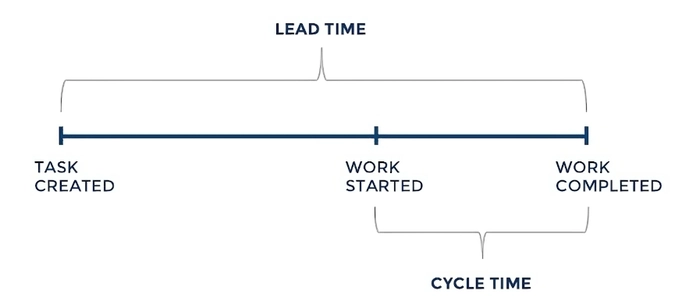
Cycle time is the amount of time it takes to complete one unit of work from start to finish—but only counting the time when work is actively being done.
Think of it like this:
- Cycle time = “How long it takes to build it once we start”
- Lead time = “How long the customer waits from request to delivery”
Cycle time focuses on your execution speed, while lead time reflects the full experience including waiting in queues.
Cycle time in a simple example
Imagine a task card moves through your workflow like this:
- Started on Monday at 10:00 AM
- Finished on Tuesday at 2:00 PM
If your team worked on it actively for a total of 6 hours across those two days, then:
Cycle time = 6 hours
The calendar time between start and finish might be longer, but cycle time is about the active work time.
How to calculate cycle time
You can calculate cycle time in two beginner-friendly ways, depending on how you track work:
Method 1: Per item (best for knowledge work)
Cycle time = Finish time − Start time (using your workflow start/finish points)
Example: In Progress → Done
Many Kanban teams measure cycle time this way because it’s consistent and easy to track on a board.
Method 2: From throughput (best for repeatable production)
If you produce a steady flow of items, you can approximate:
Average cycle time = Work-in-Progress (WIP) ÷ Throughput
This is a practical way to understand how WIP affects speed: more WIP usually increases cycle time.
Cycle time vs lead time vs takt time
These three get confused constantly—here’s the clean separation:
- Cycle time: How long it takes to complete the work once started
- Lead time: How long it takes from request to delivery (includes waiting)
- Takt time: The pace of demand—how often you must complete an item to meet customer need
If you want the full comparison with examples, read: Takt Time vs Cycle Time vs Lead Time: Clear Explanation.
Why cycle time matters in Lean
Cycle time matters because it helps you improve what Lean cares about most: flow.
When cycle time drops, teams usually see:
- Faster delivery
- Less multitasking
- Fewer handoff delays
- Higher predictability
- Less stress from “everything is urgent”
Cycle time is also a powerful “truth metric” because it reflects how the system actually behaves—not how it looks in a status meeting.
What causes long cycle time?
Long cycle time usually comes from one (or more) of these patterns:
- Too much WIP: items compete for attention, progress slows
- Hidden blockers: work gets stuck without clear signals
- Large work items: tasks are too big to finish quickly
- Context switching: constant jumping between tasks creates delays
- Unclear “done”: rework and back-and-forth expands time
- Handoffs: waiting for approvals, reviews, or other teams
How to reduce cycle time (practical techniques)
Here are proven Lean / Kanban moves that reduce cycle time without adding headcount:
1) Make work smaller
Split large items into smaller deliverables that can move to Done faster. Smaller work reduces uncertainty and makes flow smoother.
2) Limit work in progress
WIP limits reduce multitasking and speed up completion. Fewer active items means more focus and faster finish.
3) Expose blockers visually
Add a clear “Blocked” signal (like a magnet or blocker card) so stuck work is obvious and gets attention immediately.
4) Reduce handoffs
Where possible, complete work within one team or one “swimlane” to avoid waiting and re-queueing.
5) Standardize the repeatable steps
Use lightweight standard work for recurring tasks (checklists, definitions, templates). Consistency reduces rework and confusion.
What’s a “good” cycle time?
There’s no universal perfect number.
A “good” cycle time is one that is:
- Predictable (doesn’t swing wildly)
- Short enough to support customer expectations
- Stable enough that you can plan around it
Start by measuring your current cycle time, then aim for small, consistent improvement rather than dramatic overnight change.
Final Thoughts
Cycle time is a simple Lean metric with a big payoff: it tells you how fast work actually gets done once it begins.
Track it consistently, improve it through smaller work and lower WIP, and you’ll create a calmer, more predictable system—whether you’re running a factory line or managing knowledge work on a Kanban board.
Related reading: