
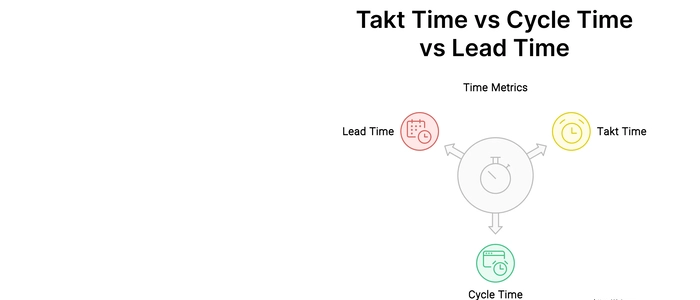
Takt Time vs Cycle Time vs Lead Time: Clear Explanation
Takt time, cycle time, and lead time are three of the most commonly misunderstood metrics in Lean and Kanban.
Teams often use them interchangeably — or track the wrong one entirely — which leads to poor decisions, unrealistic expectations, and constant frustration. In reality, each metric answers a very different question about how work flows through a system.
This guide explains takt time vs cycle time vs lead time in plain language, with examples you can actually apply.
Why These Three Metrics Matter
Flow-based systems like Kanban rely on visibility and predictability. Without clear definitions, teams:
- Confuse demand with capacity
- Optimize the wrong part of the process
- Blame people instead of fixing systems
Understanding these metrics helps you design better workflows, set realistic expectations, and spot problems early.
What Is Takt Time?
Takt time is the rate at which work must be completed to meet customer demand.
It answers the question:
“How often do we need to finish one unit of work to keep up with demand?”
Takt Time Formula
Takt Time = Available Work Time ÷ Customer Demand
Example
If your team has 6 hours (360 minutes) of productive time per day and customers request 36 items per day:
Takt time = 10 minutes per item
This does not mean each item takes 10 minutes to complete. It means one item must be finished every 10 minutes to satisfy demand.
What Is Cycle Time?
Cycle time is how long it actually takes to complete one item once work starts.
It answers the question:
“How fast can we produce or complete one unit of work?”
Example
If a task takes 25 minutes of active work from start to finish, its cycle time is 25 minutes — regardless of how long it waited beforehand.
Cycle time is about capacity and efficiency, not demand.
What Is Lead Time?
Lead time is the total time from request to delivery.
It answers the question:
“How long does a customer wait from asking for something until receiving it?”
What Lead Time Includes
- Waiting time
- Queue time
- Active work time (cycle time)
- Delays and handoffs
In knowledge work, lead time is often much longer than cycle time — mostly because of waiting.
Takt Time vs Cycle Time vs Lead Time (Side-by-Side)
- Takt Time: Demand rate (external)
- Cycle Time: Production speed (internal)
- Lead Time: Customer experience (end-to-end)
They are connected — but not interchangeable.
How These Metrics Work Together
Takt Time vs Cycle Time
If your cycle time is slower than takt time, you cannot keep up with demand. Work will pile up.
If your cycle time is faster than takt time, you have spare capacity — but that doesn’t automatically reduce lead time.
Cycle Time vs Lead Time
Reducing cycle time helps, but most lead time comes from waiting, not working.
This is why visualizing flow is so important.
Why Teams Get This Wrong
Common mistakes include:
- Using lead time to plan capacity
- Using cycle time to estimate demand
- Ignoring takt time entirely
These misunderstandings often show up during problem-solving sessions. Tools like the 5 Whys help teams uncover why flow breaks down in the first place.
Using These Metrics on a Kanban Board
Kanban boards make these concepts visible:
- Cycle time becomes visible when work moves steadily across columns
- Lead time becomes visible when cards sit idle in queues
- Takt time becomes relevant when demand exceeds throughput
If you’re building or refining your board, these guides help:
- How to Build a Kanban Board (Step-by-Step)
- Kanban Board Examples from Real Teams
- What Makes a Good Kanban Board? (Real Examples)
- Kanban Cards: How to Use Them the Right Way
- What Are Swimlanes? (Kanban & Agile Explained)
Which Metric Should You Focus On?
- Planning capacity? → Cycle time
- Meeting demand? → Takt time
- Improving customer experience? → Lead time
High-performing teams understand all three — and know when to use each.
From Metrics to Improvement
Metrics don’t solve problems. They point to them.
When numbers look wrong, structured thinking tools help you respond:
- Root Cause vs Symptom: How to Think Like an Improver
- A3 Problem Solving: Step-by-Step Beginner Guide
Final Thoughts
Takt time, cycle time, and lead time aren’t competing metrics — they’re complementary lenses.
When you understand what each one truly measures, you stop chasing speed and start designing systems that flow.
Product Tie-In — PMXBOARD Kanban Board Sets
PMXBOARD Kanban Board Sets are designed to make flow, queues, and timing visible at a glance. By visualizing work clearly, teams can track cycle time, spot lead time delays, and align capacity with demand — turning abstract metrics into everyday improvement.