
What Is Hoshin Kanri? (Strategy Deployment for Teams)
Many teams don’t have a strategy problem — they have an execution and alignment problem.
Hoshin Kanri is a Lean strategy deployment method that connects long-term direction to annual priorities, team-level targets, and daily work.
In plain terms: it’s a system for making sure the most important goals actually get done — without turning strategy into a slide deck that disappears after a quarterly meeting.
What Is Hoshin Kanri?
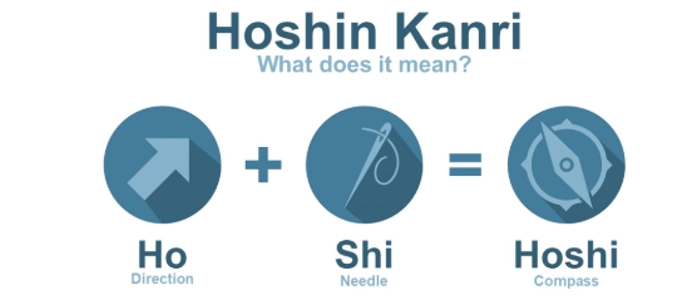
Hoshin Kanri (often translated as “direction management” or “policy deployment”) is a structured approach to:
- set a clear long-term vision (3–5 years)
- choose a small number of breakthrough objectives
- translate them into annual priorities
- deploy those priorities through the organization
- review progress regularly and adjust quickly
It’s popular in Lean organizations because it avoids “strategy drift” and forces hard prioritization.
Why Teams Use Hoshin Kanri
Most organizations struggle with the same pattern:
- too many initiatives
- unclear ownership
- teams working hard… but not on the same things
- progress updates that are status-heavy and action-light
Hoshin Kanri solves this by creating a simple but disciplined chain:
Vision → Breakthroughs → Annual Priorities → Team Targets → Daily Work → Review & Learn
Key Concepts in Hoshin Kanri
1) Breakthrough Objectives
These are the few game-changing outcomes you want over the next 3–5 years (not dozens of goals). Examples:
- Cut customer lead time in half
- Reach world-class quality levels
- Build a scalable operating model for growth
2) Annual Priorities
Breakthrough objectives are too large to execute directly, so you choose annual priorities that move the needle this year.
Good annual priorities are specific, measurable, and limited in number.
3) Catchball (Two-Way Deployment)
Catchball is the back-and-forth dialogue used to deploy strategy realistically.
Instead of leadership “throwing goals over the wall,” teams discuss:
- what outcomes are expected
- what constraints exist
- what targets are achievable
- what support/resources are needed
This is how alignment becomes real — and how teams commit to targets they helped shape.
4) The X-Matrix (Optional but Common)
Many teams use an X-matrix to visually connect:
- long-term objectives
- annual priorities
- key metrics
- major initiatives
- owners
You don’t need an X-matrix to do Hoshin, but it helps make strategy visible and consistent.
Hoshin Kanri Step-by-Step (Practical Implementation)
Step 1: Define the Vision and “True North”
This is your long-term direction — what you are building toward and how you define success.
Many organizations anchor “True North” using themes like:
- customer value
- quality
- delivery / lead time
- cost / productivity
- people development
Step 2: Choose 1–3 Breakthrough Objectives
Be ruthless. If everything is strategic, nothing is strategic.
Breakthrough objectives should feel meaningful and a bit uncomfortable — they require focus and change, not “business as usual.”
Step 3: Set Annual Priorities and Targets
Translate the breakthroughs into what must be achieved this year.
Examples of annual targets:
- reduce lead time from 18 days to 12 days
- increase throughput by 20% without increasing headcount
- reduce defect rate by 30%
Step 4: Deploy Through Catchball
Now the most important part: discuss deployment with the teams who will execute.
Catchball questions to use:
- What actions would actually move this metric?
- What tradeoffs are required?
- What work must stop to protect focus?
- What resources or decisions are needed?
Step 5: Connect to Daily Management
Hoshin Kanri is not a planning event — it’s a management system.
Teams connect annual priorities to daily execution using visible management such as:
- weekly or biweekly review rhythms
- daily huddles
- visual boards (metrics + actions)
- problem-solving routines (PDCA, A3, 5 Whys)
Step 6: Review, Learn, and Adjust (PDCA)
Hoshin Kanri is built for learning. The idea is to steer the strategy through reality.
Strong review cadences focus on:
- Are the key metrics moving?
- What is blocking progress?
- What experiments/actions will we try next?
- What should we stop doing?
Common Mistakes (And How to Avoid Them)
- Too many priorities: limit to protect execution
- No catchball: deployment becomes unrealistic and resisted
- Tracking only activities: manage to outcomes and metrics
- Weak review cadence: problems stay hidden until it’s too late
- Not linking to daily work: strategy stays abstract
Where Hoshin Kanri Fits with Flow and Throughput
Hoshin sets direction. Execution still depends on flow.
That’s why many Lean teams connect Hoshin to flow metrics like:
- throughput
- lead time
- work-in-progress (WIP)
- flow efficiency
When those metrics improve, strategy becomes measurable — not just inspirational.
Final Thoughts
Hoshin Kanri helps teams stop chasing everything and start executing what matters most.
If your organization wants real alignment, fewer priorities, and stronger execution, Hoshin provides a proven structure to connect strategy to daily work — and adjust fast when reality changes.