
Lean Manufacturing Basics
Lean manufacturing is a simple but powerful idea: deliver more value with less waste. Instead of speeding up the workers or pushing harder, Lean focuses on removing friction from the system so work flows smoothly. Whether you’re building cars, writing software, or managing daily operations, Lean principles help teams improve quality, reduce delays, and work more efficiently.
What Is Lean Manufacturing?
Lean is a management philosophy rooted in the Toyota Production System (TPS). It focuses on identifying value from the customer’s perspective and eliminating anything that doesn’t contribute to that value. Lean is not about cutting resources—it’s about optimizing how work flows.
At its core, Lean is built on three foundational ideas:
- Value: What the customer actually cares about.
- Flow: How smoothly work moves from start to finish.
- Continuous Improvement (Kaizen): Small, consistent improvements over time.
If you want to see how Lean connects to modern workflow systems, read What Is Continuous Flow? (And How to Achieve It).
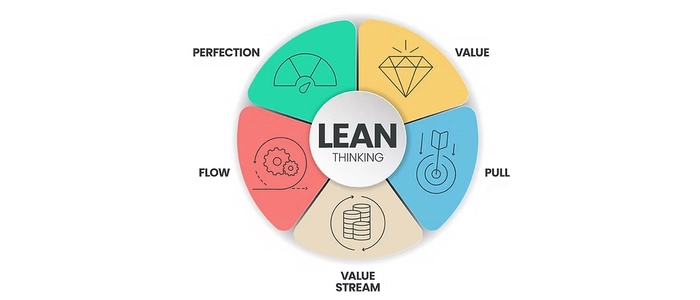
The Five Principles of Lean
1. Define Value
Value is what the customer is willing to pay for. Lean begins by clarifying what truly matters so teams stop wasting time on activities that don’t move the needle.
2. Map the Value Stream
A value stream map shows every step involved in delivering a product or service. The goal is to identify where time, effort, or resources are wasted.
Value stream mapping is the foundation of process visualization. If you use a Kanban board, you’re already visualizing part of your value stream. For deeper insight, see Kanban Metrics That Actually Matter (And Which Don’t).
3. Create Flow
Lean emphasizes keeping work moving smoothly. When flow breaks down, delays, rework, and frustration increase.
To understand how flow is measured and improved, read Flow Efficiency: The Metric That Shows True Productivity.
4. Establish Pull
Instead of pushing work into the system, Lean uses a pull approach. Work only moves forward when the next step has capacity.
This prevents overload and reduces the buildup of work in progress (WIP). If you’re new to managing WIP, start with What Are WIP Limits? (And Why Most Teams Ignore Them).
5. Pursue Perfection
Lean is never finished. It’s a discipline of continuous improvement—small, incremental changes that compound into major gains over time.
The Three Types of Waste (Muda)
Lean identifies seven forms of waste, but they are grouped into three high-level categories:
- Muda (Waste): Non–value-added activities such as waiting, overproduction, or defects.
- Mura (Unevenness): Variability that disrupts flow.
- Muri (Overburden): Overloading people or systems, leading to errors and fatigue.
Lean Tools and Techniques
Lean offers practical tools used to simplify processes and eliminate waste:
- 5S: Organize the workplace for efficiency and clarity
- Standard Work: Define the best-known method for each task
- Andon: Make problems visible immediately
- Value Stream Mapping: Understand your end-to-end process
- Kanban: Visualize work and limit WIP
Lean vs. Traditional Manufacturing
Traditional manufacturing relies on batching and large inventories. Lean takes a different approach:
- Traditional: Optimize machine utilization
- Lean: Optimize flow
Lean and Continuous Improvement (Kaizen)
The heart of Lean is continuous improvement. Kaizen encourages small daily improvements instead of waiting for major initiatives.
Product Tie-In: PMXBOARD Kaizen & Lean Tools
The PMXBOARD Kaizen Board Set helps teams:
- Map value streams
- Visualize waste and bottlenecks
- Run structured improvement events
- Track ideas and actions clearly
Next Steps
Lean manufacturing is simple to understand but transformative when applied consistently. Start small: visualize work, identify waste, and improve flow. Over time, Lean helps teams deliver more value with less effort and greater clarity.