
What Is Process Waste? (Beginner-Friendly Lean Guide)
Most organizations don’t have a “people problem.” They have a process waste problem.
Work takes longer than it should, teams feel constantly busy, and results still slip—because time and effort get consumed by steps that don’t create real value. The good news: once you learn to see waste, you can remove it.
This beginner-friendly guide explains what process waste is, common examples, and simple ways to reduce it—without turning your workplace into a strict factory system.
What Is Process Waste?
Process waste is any activity in a workflow that consumes time, effort, or resources without creating value for the customer (internal or external).
In Lean thinking, value is what the customer would be willing to pay for because it directly helps them achieve what they want. Anything else is either:
- Non-value-added waste (should be removed), or
- Necessary non-value-added work (may be required today, but should be reduced over time)
Example: Compliance documentation may be “necessary,” but extra duplicate forms or re-entering the same data is pure waste.
Why Process Waste Happens
Waste is rarely caused by laziness. It usually grows from:
- Unclear ownership and messy handoffs
- Too much work in progress (too many things started at once)
- Hidden bottlenecks and uneven workload
- Inconsistent methods (no standard work)
- Over-reliance on approvals and “permission gates”
- Tools that don’t support the work (slow systems, missing info, poor layout)
Waste thrives when problems stay invisible. That’s why visual management is so effective—it makes the reality obvious.
Common Types of Process Waste (With Simple Examples)
Here are the most common waste patterns you’ll see in almost any workflow—manufacturing or office work.
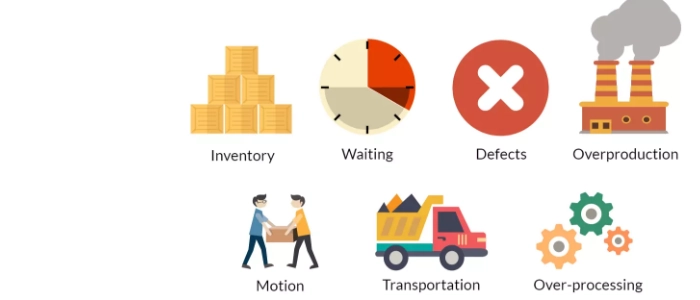
1) Waiting
- Tasks sitting in a queue for approval
- Work paused because materials, info, or decisions are missing
- People waiting for a system, machine, or teammate
2) Rework and Defects
- Fixing mistakes after delivery
- Redoing work because requirements were unclear
- Repeated “final edits” that should have been caught earlier
3) Overprocessing
- Adding extra steps “just in case”
- Creating reports nobody uses
- Double-checking work because the process isn’t trusted
4) Excess Motion
- Searching for tools, files, or information
- Walking back and forth because the workspace is poorly arranged
- Constant switching between apps, tabs, or documents
5) Handoffs and Transfers
- Work bouncing between departments
- Tasks passed along without clear next steps
- “Throw it over the wall” workflows
6) Excess Inventory / Too Much WIP
- Too many open tasks at once
- Piles of unfinished work
- Backlogs growing faster than completion
7) Overproduction
- Producing work earlier than needed
- Building features or documents that never get used
- Starting more projects than the team can finish
How to Spot Process Waste in Your Workflow
Use these quick “waste detection” signals during a walk-through or team review:
- Where are things waiting? (queues, inboxes, “pending approval”)
- Where are errors showing up? (returns, rework loops, repeated fixes)
- Where do people search? (files, tools, requirements, status updates)
- Where do handoffs break? (confusion, missing info, blame cycles)
- Where is WIP growing? (too many “in progress” items)
A simple rule: if a task spends most of its life waiting instead of being actively worked, you likely have significant process waste.
How to Reduce Process Waste (Practical, Beginner Steps)
You don’t need a big Lean transformation to start. Try these steps first:
1) Make the work visible
Put the workflow on a board—physical or digital—so everyone can see:
- what is being worked on
- what is waiting
- what is blocked
- what is done
2) Limit work in progress
Waste explodes when everything is “in progress.” Set simple WIP limits to reduce multitasking and speed up flow.
3) Reduce handoffs by improving clarity
Standardize what “ready” means. For example, before a task moves to the next stage, require:
- a clear owner
- complete input information
- a defined next action
4) Build quality into the process
Fix problems earlier, where they occur. Use checklists, templates, or quick verification steps to prevent defects and rework.
5) Improve the bottleneck first
Don’t optimize every step. Improve the constraint that controls throughput. That’s where waste reduction creates the biggest results.
Final Thoughts
Process waste is everywhere—but once you learn to see it, you can remove it systematically. The goal isn’t to make work “busy.” The goal is to make work flow—with less effort, fewer delays, and better outcomes.
Related reads: