
8 Wastes of Lean: How to Find and Remove Them
Waste is the silent killer of productivity.
In Lean thinking, waste refers to anything that consumes time, effort, or resources without creating value for the customer. Learning to see waste — and remove it — is one of the most powerful skills any team can develop.
This guide breaks down the 8 wastes of Lean, shows how they appear in real work, and explains practical ways to eliminate them using Kaizen and visual management.
If you’re new to the concept of waste, start here first: What Is Process Waste? (Beginner-Friendly Lean Guide)
What Are the 8 Wastes of Lean?
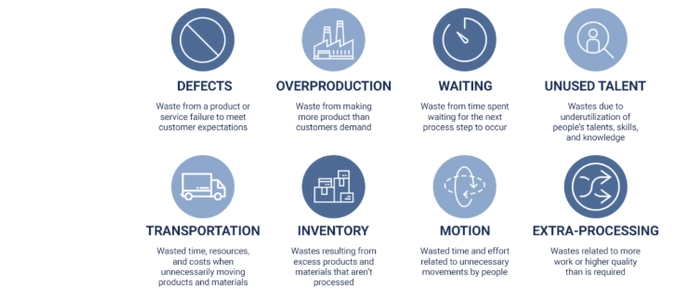
The 8 wastes of Lean are often remembered by the acronym DOWNTIME. Each category represents a different way value is lost.
The eight wastes are:
- Defects
- Overproduction
- Waiting
- Non-Utilized Talent
- Transportation
- Inventory
- Motion
- Extra Processing
1. Defects
Defects are errors that require rework, correction, or replacement.
Examples include:
- Incorrect data entry
- Software bugs
- Manufacturing errors
- Incomplete or unclear work
Defects create waste twice — once when the error occurs, and again when it must be fixed.
Reducing defects often requires:
- Clear standards
- Visual checks
- Early feedback loops
2. Overproduction
Overproduction means producing more than is needed, earlier than needed.
This includes:
- Building features no one requested
- Creating reports nobody reads
- Producing work before downstream steps are ready
Overproduction hides problems and increases inventory and waiting.
3. Waiting
Waiting occurs whenever work sits idle.
Common sources include:
- Approvals
- Handoffs
- Unclear priorities
- Dependencies on other teams
Waiting time often makes up the largest portion of lead time — even when teams feel “busy.”
4. Non-Utilized Talent
This waste occurs when people’s skills, ideas, and experience are underused.
Examples:
- People only executing tasks, never improving processes
- Decisions made far from the work
- No mechanism for suggestions or feedback
Kaizen thrives when teams are empowered to improve their own work.
5. Transportation
Transportation waste is unnecessary movement of work or information.
In knowledge work, this can look like:
- Multiple handoffs between teams
- Sending files back and forth
- Re-entering the same information in multiple systems
Each handoff increases the risk of delay and misunderstanding.
6. Inventory
Inventory is unfinished work.
This includes:
- Large backlogs
- Too many tasks in progress
- Unreleased features
Excess inventory hides problems and increases lead time.
Reducing inventory often starts by limiting work in progress and improving flow.
7. Motion
Motion waste refers to unnecessary movement by people.
Examples include:
- Searching for information
- Switching between tools constantly
- Physically moving between locations without adding value
In knowledge work, motion often shows up as excessive context switching.
To understand the cost of this, see: The Hidden Cost of Multitasking (Lean Perspective)
8. Extra Processing
Extra processing means doing more work than is required.
This includes:
- Overly detailed reports
- Unnecessary approvals
- Duplicate documentation
- Excessive formatting or polishing
Extra processing often feels productive — but adds no customer value.
How to Find Waste in Your Process
The hardest part of Lean is learning to see waste.
Helpful techniques include:
- Visualizing the workflow
- Tracking waiting time
- Observing where work piles up
- Listening to team frustration
Standardized work makes waste visible by revealing deviations:
Standard Work: How to Create Reliable Processes
Using 5S to Reduce Waste
Many wastes are caused by disorganization.
The 5S system helps reduce:
- Motion
- Waiting
- Extra processing
Learn how it works here: What Is 5S? Lean Workplace Organization Guide
Waste Reduction Is a Culture, Not a Project
Eliminating waste is not a one-time initiative.
Teams that succeed with Lean:
- Make waste visible daily
- Encourage continuous improvement
- Focus on systems, not individuals
This distinction matters deeply:
Lean Culture vs Lean Tools: What Actually Drives Change
Final Thoughts
The 8 wastes of Lean give teams a shared language to identify what slows them down.
When you learn to spot waste, improvement opportunities appear everywhere — not as criticism, but as possibilities.
By making work visible, standardizing processes, and engaging people in Kaizen, waste stops being hidden — and starts being removed.