
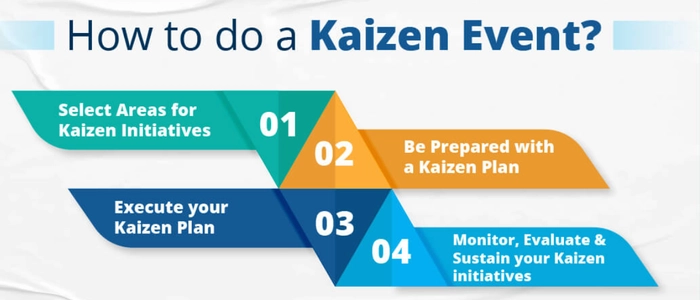
How to Run a Kaizen Event (Step-by-Step Playbook)
A Kaizen event is one of the fastest ways to drive meaningful process improvement — when it’s done correctly.
This step-by-step playbook explains exactly how to plan, run, and follow up on a Kaizen event so your team delivers real results instead of temporary fixes.
If you’re new to Kaizen, start here first: What Is Kaizen? A Beginner’s Guide to Continuous Improvement
What Is a Kaizen Event?
A Kaizen event is a focused, short-term improvement workshop where a cross-functional team works intensively on a specific problem or process.
Most Kaizen events last between 2 to 5 days and are designed to:
- Identify root causes
- Remove waste and bottlenecks
- Improve flow and efficiency
- Implement changes immediately
Kaizen events are powerful — but they are only one part of continuous improvement.
This comparison explains when to use them: Kaizen Events vs Daily Kaizen: What’s the Difference?
When Should You Run a Kaizen Event?
A Kaizen event is the right tool when:
- A process is clearly broken or stuck
- Work is piling up at specific steps
- Lead time is too long
- Problems keep recurring
- Multiple teams are involved
It’s not the right tool for vague issues or problems without a clear scope.
Step 1: Define the Problem Clearly
Every successful Kaizen event starts with a well-defined problem.
A good problem statement:
- Describes what is happening
- Defines where it happens
- Explains why it matters
Avoid jumping to solutions. Focus on understanding the problem first.
If you need structure, use: A3 Problem Solving: Step-by-Step Beginner Guide
Step 2: Assemble the Right Team
Kaizen events succeed because of collaboration.
Your team should include:
- People who do the work daily
- Process owners
- Stakeholders affected by the process
- A facilitator (if available)
Keep the group small enough to move fast, but diverse enough to see the whole system.
Step 3: Map the Current State
Before improving anything, the team must see how work actually flows today.
Use visual tools to:
- Map process steps
- Identify handoffs
- Expose waiting and delays
- Highlight bottlenecks
Value stream mapping is especially useful at this stage:
What Is Value Stream Mapping? (Beginner Guide)
Value Stream Analysis: A Step-by-Step Beginner Guide
Step 4: Identify Root Causes
Fixing symptoms creates temporary improvement. Fixing root causes creates lasting change.
During the event, the team should ask:
- Why does this problem occur?
- What conditions allow it to continue?
- Where does flow actually break?
Helpful methods include:
What Is Root Cause Analysis? (Beginner Guide)
Bottlenecks: How to Identify and Remove Them
Step 5: Design and Test Improvements
Once root causes are clear, the team designs countermeasures.
Strong Kaizen improvements are:
- Simple
- Testable
- Low-risk
- Focused on flow
Changes should be tested immediately — not documented for later.
Step 6: Use the PDCA Cycle
Kaizen events follow the PDCA cycle:
- Plan – Define the change
- Do – Test it
- Check – Review results
- Act – Standardize or adjust
This ensures learning happens during the event, not after.
For a deeper explanation, see: PDCA Cycle Explained (Plan-Do-Check-Act Guide)
Step 7: Standardize and Follow Up
A Kaizen event is only successful if improvements stick.
Before the event ends:
- Document the new standard
- Assign ownership
- Define follow-up checks
- Measure impact
Without follow-up, processes drift back to old habits.
Common Kaizen Event Mistakes
- Trying to fix too much at once
- Skipping root cause analysis
- Focusing on tools instead of flow
- No leadership support after the event
Remember: Kaizen events accelerate improvement — they don’t replace daily Kaizen.
Final Thoughts
A Kaizen event is not about working harder for a few days.
It’s about creating clarity, removing friction, and teaching teams how to improve systematically.
When done well, Kaizen events deliver immediate results — and build long-term improvement capability across the organization.