
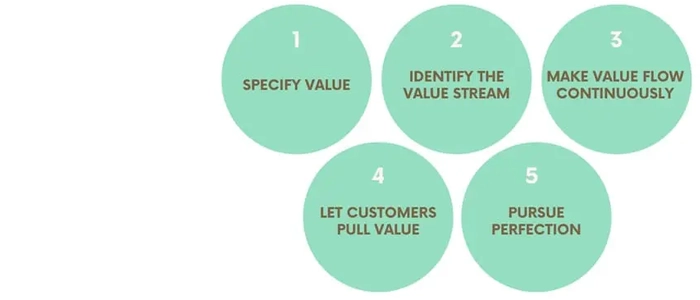
Value Stream Analysis: A Step-by-Step Beginner Guide
Value stream analysis is one of the fastest ways to understand why work feels slow, messy, or unpredictable—even when everyone is “busy.” It helps you see the end-to-end flow (from request to delivery), identify where time is truly spent, and target improvements that actually move the needle.
This beginner guide walks you through a simple, practical, step-by-step process you can use in manufacturing, service operations, or knowledge work.
What Is Value Stream Analysis?
Value stream analysis is the practice of examining how work flows through a process—from start to finish—so you can:
- Separate value-added work from non-value-added time (waiting, rework, handoffs).
- Find the true constraints and bottlenecks that slow delivery.
- Design a future state that reduces delays and improves flow.
- Build an action plan that teams can execute and sustain.
If you want the mapping foundation first, start here:
When Should You Use Value Stream Analysis?
Value stream analysis is especially useful when you’re experiencing any of the following:
- Lead times are long, unpredictable, or “mysteriously” growing.
- Work sits in queues, approvals, or waiting states for days/weeks.
- Teams blame each other, but nobody can prove where the real delays occur.
- Quality problems or rework keep showing up late in the process.
- You want to improve throughput without adding headcount.
The Step-by-Step Value Stream Analysis Process
Step 1) Pick one value stream and define the scope
The biggest beginner mistake is trying to map “everything.” Don’t. Choose one value stream and define clear boundaries.
- Start point: What triggers the work? (Customer order, ticket created, job released, request approved)
- End point: What counts as “delivered”? (Shipped, installed, invoiced, deployed, accepted)
- Product/service family: Which type of work is included? (Don’t mix too many variants early.)
Tip: If your organization runs Kaizen events, this makes a great focused Kaizen topic. Here’s a practical playbook for running one:
Step 2) Gather the right people and go see the work
You don’t analyze a value stream from a conference room alone. Invite the people who actually do the work and people who receive the work (upstream/downstream). A good starting group:
- One or two operators / doers from key steps
- A supervisor or team lead
- Someone from quality, scheduling, or customer support (where relevant)
- A process owner who can remove roadblocks
Rule of thumb: If the mapping team can’t answer “what happens next?” in real time, you’re missing someone important.
Step 3) Map the current state at a high level
Start with a simple “current-state” map. Don’t overcomplicate it. Capture the major steps and handoffs in order.
At minimum, write down:
- Each major process step (5–12 steps is plenty for a first pass)
- Where work queues or waits
- Where decisions/approvals happen
- Where rework loops occur
At this stage, it’s okay if it’s messy. The goal is visibility, not perfection.
Step 4) Add time, inventory/queue, and quality signals
Now you turn a “process picture” into a true analysis. Add the data that reveals flow problems.
- Process time (touch time): How long the step takes when someone is actively working.
- Wait time / queue time: How long the work sits before the step begins.
- Work-in-process (WIP): How many items are sitting between steps (backlog, piles, queues).
- First-pass yield / defects: Where work fails and loops back for fixes.
Quick insight: In many environments, the largest improvement isn’t reducing process time—it’s reducing waiting, queues, and rework.
Step 5) Calculate lead time and identify where time is really spent
With the time data, estimate:
- Total lead time: end-to-end elapsed time from start to finish (including waiting).
- Total touch time: sum of process times across steps (active work time).
If lead time is 20 days and touch time is 3 hours, you’ve just discovered the real improvement opportunity: flow.
Step 6) Find bottlenecks and constraints
A bottleneck is where demand exceeds capacity (or where variability creates chronic queues). Look for:
- Steps with consistently growing queues/WIP
- Steps where work “stops” waiting on expertise, approvals, or equipment
- Steps with high rework or frequent clarifications
- Steps where batching is required (or encouraged) and delays compound
If you want a deeper bottleneck-specific guide:
Step 7) Classify waste and root causes
Once bottlenecks are visible, ask: Why is work piling up here? Common root causes include:
- Too much WIP (too many items started, not enough finished)
- Unclear standards (different people do the step differently)
- Dependencies and approvals that arrive late
- Quality issues discovered too far downstream
- Batching and handoffs that create long waiting periods
Don’t jump straight to solutions. First, validate the cause with the people doing the work.
Step 8) Design a practical future state
A strong future state is not “a perfect world.” It’s a realistic target the team can implement in stages. A great future state often includes:
- Smaller batch sizes (or continuous flow where possible)
- Explicit WIP limits at key points to prevent overload
- Earlier quality checks (catch defects sooner)
- Simplified approvals or clear decision rules
- Clear standards for critical steps
- Pull signals so work starts based on capacity, not pressure
Tip: If you’re a beginner, focus on 2–4 changes that directly reduce waiting and rework. Those are usually the highest ROI improvements.
Step 9) Turn the future state into an action plan
To avoid “great workshop, nothing changed,” convert your future state into a clear plan:
- Action: what will change
- Owner: who is responsible
- Due date: when it will be completed
- Success metric: what will improve (lead time, WIP, defects, on-time delivery)
- Follow-up cadence: when you’ll review progress
If this is part of a Kaizen event, lock in review dates before the team leaves the room.
Step 10) Sustain the gains with simple visual management
The final step is making the new process the default. Sustainment usually requires:
- Visible tracking of the key metrics (lead time, WIP, defects, on-time delivery)
- Standard work for critical steps
- A short routine to review blockers and keep WIP under control
The goal is not to “manage harder.” The goal is to make flow problems visible early—so the team corrects quickly.
A Simple Example (Beginner-Friendly)
Imagine a value stream for “customer quote to approved proposal” in a services business:
- Request received
- Requirements clarified
- Draft proposal created
- Pricing review
- Legal review
- Final approval
- Proposal sent
In analysis, you might discover:
- Drafting takes 2 hours, but the draft sits in queue for 4 days.
- Legal review takes 30 minutes, but waits 6 days because work is batched weekly.
- Clarification questions bounce back and forth because requirements aren’t standardized.
Your future state might include: a standard intake checklist, a WIP limit on drafting, and a daily 20-minute legal review window for smaller batches.
Final Thoughts
Value stream analysis helps you stop guessing and start improving what truly drives performance: flow. When you map the current state, measure waiting, identify bottlenecks, and design a realistic future state, you can reduce lead time dramatically—often without adding people or tools.
Related reading: