
Project Obeya Rooms: How High-Performing Teams Align
If you’ve ever managed a complex project, you know the pain: priorities shift, decisions stall, risks hide in spreadsheets, and alignment disappears across teams.
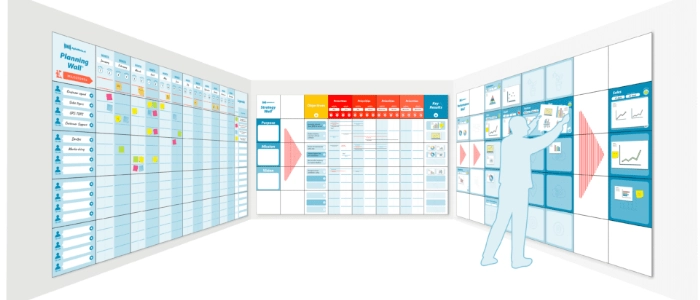
A Project Obeya Room (often called an obeya room) solves that by bringing the entire project system into one shared visual space—so teams can see reality, make decisions faster, and stay aligned week after week.
What Is a Project Obeya Room?
Obeya is a Japanese term that roughly translates to “big room.” In Lean management, it refers to a dedicated space where cross-functional teams align around goals, plans, status, risks, and decisions using visual management.
A Project Obeya Room applies this concept to a specific project or program. Instead of information scattered across decks, tools, and inboxes, the Obeya makes work visible and decision-making structured.
If you want the full foundational definition first, start here:
Why High-Performing Teams Use Obeya Rooms
High-performing teams don’t “hope” alignment happens—they design for it. Obeya works because it creates:
1) A single source of truth
Everyone sees the same priorities, timelines, dependencies, and current status—at the same time. No competing spreadsheets. No “my dashboard says something else.”
2) Faster decisions with the right people
Obeya brings stakeholders together regularly and makes decisions visible. When blockers appear, the team can resolve them immediately—without weeks of back-and-forth.
3) Early visibility of risk
Risks aren’t buried in a log. They’re on the wall. That visibility drives earlier mitigation and fewer surprises.
4) Real accountability (without micromanagement)
When commitments are visual and updated in cadence, ownership becomes clearer and follow-through improves naturally.
5) Better cross-functional alignment
Engineering, operations, marketing, leadership—everyone can connect their work to the project’s goals and constraints.
The Core Zones of a Strong Project Obeya
Obeya rooms vary by industry, but most high-performing setups include these “zones.” Think of them as an operating system for the project.
Zone 1: North Star and objectives
- Project purpose (why it matters)
- Success metrics (outcomes, not just activities)
- Key milestones and target dates
Zone 2: Master plan and milestones
- High-level roadmap (phases and gates)
- Milestone tracker (what’s on track vs at risk)
- Dependencies and constraints
Zone 3: Execution tracking
- Workstream boards (Kanban-style or phase-based)
- Owners for each workstream
- Current-week priorities
This is where visual execution really pays off—if you want to go deeper on why visual beats “tracking,” read:
Zone 4: Issues, risks, and decisions
- Risks (probability, impact, mitigation, owner)
- Issues (what’s blocked, what changed, what needs help)
- Decision log (decision, owner, date, next action)
Zone 5: Learnings and continuous improvement
- What’s working / what’s not
- Action items to improve flow
- Retrospective highlights
How to Set Up a Project Obeya Room Step-by-Step
- Pick the right project scope: Obeya works best for cross-functional initiatives with meaningful risk, dependencies, or stakeholder complexity.
- Define outcomes and metrics: Clarify how success will be measured (delivery, cost, quality, customer impact, safety, etc.).
- Map the workstreams: Identify 3–8 workstreams (ex: design, build, test, launch, procurement, training).
- Build the wall layout: Create the five zones above and keep them readable from a few feet away.
- Assign owners: Every workstream, risk, and decision should have a named owner.
- Set a cadence: A consistent Obeya routine matters more than a perfect layout.
- Keep it alive: If the room isn’t updated, it becomes decoration. Update it as part of the operating rhythm.
The Obeya Cadence That Keeps Teams Aligned
A simple cadence that works for many teams:
- Daily (10–15 minutes): quick status check, blockers, immediate priorities
- Weekly (45–90 minutes): milestone review, risks/issues, decisions needed, cross-functional tradeoffs
- Monthly/phase gate: strategic review, resource shifts, roadmap adjustments
The purpose isn’t reporting. It’s alignment and decision-making.
Physical vs Digital Obeya
Many teams try to run Obeya fully digital. That can work—but physical spaces offer benefits that are hard to replicate:
- Better attention (fewer tabs, fewer distractions)
- Faster group sensemaking (everyone sees the same wall)
- Stronger engagement (teams interact with the system, not a screen)
Hybrid is common: maintain a physical Obeya for core alignment, then capture key outcomes digitally for remote visibility.
Common Mistakes to Avoid
- Turning Obeya into a reporting ceremony: the goal is decisions and alignment, not slide narration.
- Overloading the walls: clarity beats density. Remove clutter weekly.
- No ownership: if everything is “team-owned,” nothing is owned.
- No cadence: the room only works if it becomes a habit.
- Hiding bad news: Obeya is built for reality—problems must be visible to be solved.
Final Thoughts
A Project Obeya Room is one of the most practical ways to align teams in complex work. It brings goals, execution, risks, and decisions into one visible system—so the team can operate with clarity instead of chaos.
Related reading: