
What Is a Pull System? (Beginner-Friendly)
A pull system is one of those concepts that sounds technical—but it’s actually simple:
Work is pulled only when there’s capacity to do it.
In other words, you don’t push more tasks into the system just because they exist. You pull the next task only when the team (or person) is ready.
This single shift—from push to pull—is one of the biggest reasons Kanban and Lean systems reduce stress, improve flow, and help teams finish work faster.
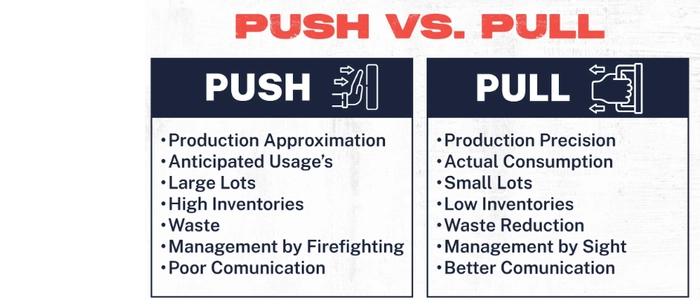
Pull System vs Push System (Simple Explanation)
Push system (what most teams accidentally do)
- Work is assigned and “pushed” into people’s queues.
- Everyone starts too many things at once.
- Tasks sit waiting in hidden backlogs and inboxes.
- Delays and bottlenecks grow quietly until deadlines explode.
Pull system (how Kanban is designed to work)
- Work is started only when there’s capacity.
- The team limits work-in-progress (WIP).
- Tasks flow step-by-step through clear stages.
- Bottlenecks become visible, so the team can fix them early.
Key takeaway: A pull system protects focus. A push system overloads it.
Why Pull Systems Work (Even for Beginners)
Pull systems succeed because they solve three common problems:
1) Too much work-in-progress
When you start fewer tasks, you finish more tasks. Pull systems make “starting” harder and “finishing” easier.
2) Hidden queues and waiting
Pull systems make waiting visible: if work can’t move forward, it becomes a team conversation instead of a silent delay.
3) Constant context switching
Pull reduces multitasking. Fewer active tasks means better quality, fewer mistakes, and faster completion.
What “Pull” Looks Like on a Kanban Board
A Kanban board is one of the clearest ways to implement pull because it makes capacity and flow visible.
Here’s the basic behavior:
- When you finish a task in In Progress, you pull the next task from To Do.
- If In Progress is full (WIP limit reached), you don’t pull anything new.
- If Review is backed up, you stop pushing more work into it and help clear the queue.
Pull is not “do whatever you want next.” Pull means “pull the next-highest priority item that fits our rules and capacity.”
The 3 Essentials of a Pull System
1) A clear workflow
You need visible stages like:
- To Do
- In Progress
- Review / Test
- Done
Pull only works when everyone agrees what each stage means.
2) Explicit WIP limits
WIP limits are the guardrails that make pull real. Example:
- In Progress (WIP 3)
- Review (WIP 2)
If the limit is reached, the rule is simple: stop starting, start finishing.
3) Clear entry rules (policies)
Pull systems work best when “ready” and “done” are defined. For example:
- Ready for Review: acceptance criteria written, self-check completed
- Done: shipped + documented + confirmed by stakeholder
Common Misunderstandings About Pull Systems
“Pull means no planning.”
No—pull still needs prioritization. Pull just prevents overload.
“Pull means no deadlines.”
No—deadlines can exist. Pull helps you meet them by improving focus and flow.
“Pull is only for manufacturing.”
Pull started in manufacturing, but it works extremely well in knowledge work, marketing, product development, operations, and personal productivity.
How to Start Using Pull (Step-by-Step)
- Visualize the work on a board (even a simple one).
- Define your workflow stages (keep it minimal at first).
- Set small WIP limits for the active stages.
- Prioritize the “To Do” column so pulling stays aligned.
- Run a daily check: Where is work stuck? What’s overloaded?
- Improve policies when you see repeated confusion or rework.
Start simple. Pull becomes powerful through consistent use, not complexity.
Final Thoughts
A pull system is one of the easiest ways to reduce overwhelm and improve delivery—because it changes the default behavior from “start everything” to “finish what matters.”
When you combine a pull mindset with a visible workflow and WIP limits, you get smoother flow, fewer bottlenecks, and better outcomes—without adding headcount.
Related reading: