
PDCA Cycle Explained (Plan–Do–Check–Act Guide)
Most improvement efforts fail for one simple reason.
Teams jump to solutions before they fully understand the problem.
The PDCA cycle exists to prevent that.
PDCA provides a structured, repeatable way to improve processes without guesswork or one-time fixes.
What Is the PDCA Cycle?
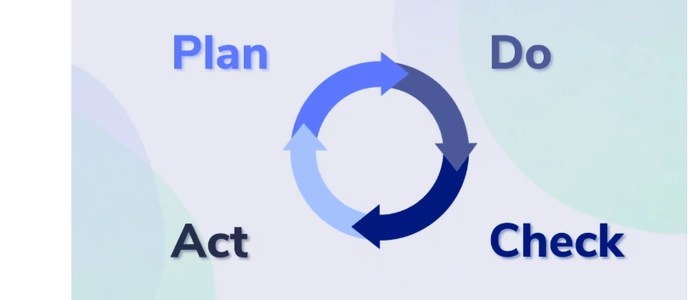
PDCA stands for Plan – Do – Check – Act.
It is a continuous improvement cycle used to test ideas, learn from results, and standardize what works.
Rather than implementing large changes all at once, PDCA encourages small experiments and fast learning.
Plan: Define the Problem and the Hypothesis
The Plan step focuses on understanding.
Teams clearly define the problem, analyze causes, and decide what they want to test.
This step answers three critical questions:
- What problem are we trying to solve?
- Why does it happen?
- What change do we believe will improve it?
Skipping this step is the fastest way to waste effort.
Do: Run a Small Experiment
The Do step is not full implementation.
It is a controlled experiment.
Teams test the change on a small scale to reduce risk and observe real behavior.
The goal is learning — not perfection.
Check: Compare Results to Expectations
This is where many teams fall short.
Checking means reviewing evidence, not opinions.
Teams compare expected outcomes with actual results and look for gaps.
If the results don’t match the hypothesis, the cycle has still succeeded — because learning occurred.
Act: Standardize or Adjust
If the change worked, teams standardize it.
If it didn’t, they adjust the approach and run another PDCA cycle.
Improvement happens through repetition, not one-time fixes.
Why PDCA Works When Other Methods Fail
PDCA slows teams down just enough to think.
It replaces assumptions with evidence and prevents overreaction to short-term results.
This discipline is why PDCA is central to effective continuous improvement systems.
PDCA and Time-Based Thinking
PDCA relies on understanding time — not just outcomes.
These concepts help teams design realistic experiments:
- What Is Takt Time? The Simplest Explanation
- Takt Time vs Cycle Time vs Lead Time: Clear Explanation
- Takt Time vs Throughput: Why They’re Not the Same
Making PDCA Visible
PDCA works best when thinking and learning are visible.
Visual workflows help teams see assumptions, results, and next actions clearly.
These resources show how visualization strengthens learning loops:
- How to Visualize Workflow for Remote Teams
- Visual Workflows: How Seeing Work Improves Decision Making
- Work Visualization: Why Seeing Work Improves Results
Final Thought
PDCA is simple by design.
Its power comes from discipline, repetition, and learning — not complexity.
Teams that practice PDCA consistently stop guessing and start improving with confidence.