
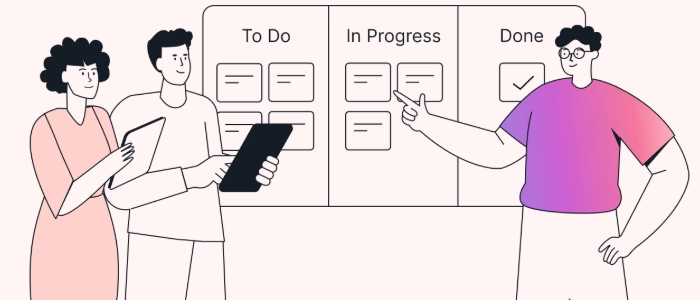
Daily Standups: How to Run Daily Meetings That Don’t Waste Time
Daily standups are meant to create alignment — not frustration.
When run well, a daily standup meeting keeps teams focused, exposes blockers early, and reinforces shared ownership of work. When run poorly, it becomes a status meeting that wastes time and drains energy.
This guide explains what daily standups are really for, why they often fail, and how to run them in a way that actually improves flow.
What Is a Daily Standup (Really)?
A daily standup is a short, time-boxed team sync designed to coordinate work — not report status to a manager.
Its purpose is to answer one core question:
How do we move work forward today?
Daily standups are one of the core Scrum ceremonies. If you want the full context, start here:
Scrum Ceremonies Explained: When and How They Work
Why Daily Standups Go Wrong
Most standups fail for the same reasons:
- They turn into status reports
- They run too long
- They focus on people instead of work
- They don’t surface real blockers
When teams answer “what did you do yesterday?” instead of “what is blocking flow?”, the standup loses its value.
The Right Focus: Work, Not People
Effective daily standups are centered on the board, not on individuals.
Instead of going person by person, walk the workflow from right to left:
- What is closest to done?
- What is stuck?
- What needs help today?
This shift alone dramatically improves standup quality.
If you want a deeper walkthrough of the Scrum version of this meeting, read:
How to Run a Daily Scrum (Standup) That Actually Works
Keep It Short (15 Minutes Means 15 Minutes)
The standup is time-boxed for a reason.
If your meeting regularly exceeds 15 minutes, it’s a signal — not a success.
Common fixes:
- Take problem-solving offline
- Park deep discussions after the standup
- Use a visible timer
Standing up helps — but discipline matters more than posture.
Expose Blockers Early
The most valuable outcome of a daily standup is early detection of blockers.
Blockers might include:
- Waiting for approvals
- Unclear requirements
- Dependencies on other teams
- Too much work in progress
Surfacing these issues daily prevents small delays from becoming major bottlenecks.
Roles Matter — But Ownership Is Shared
Scrum roles support the standup, but they don’t own it alone.
Everyone is responsible for:
- Preparing before the meeting
- Keeping updates concise
- Helping remove blockers
If roles feel unclear, this guide helps:
Scrum Roles Explained: Who Does What on an Agile Team?
Use a Visual Board — Always
Daily standups without a visible board almost always drift.
A shared Scrum or Agile board:
- Keeps the conversation grounded in reality
- Prevents vague updates
- Makes progress and delays obvious
If you’re new to Scrum boards, start here:
What Is a Scrum Board? Full Walkthrough for Beginners
Daily Standup vs Daily Huddle
Not all teams use Scrum — and that’s okay.
Many teams run daily huddles instead of formal standups. The principles are the same:
- Short
- Visual
- Focused on flow
For non-Scrum teams, this guide is helpful:
How to Run a Daily Huddle That Actually Works
Final Thoughts
A daily standup should energize your team — not exhaust it.
When focused on work, supported by a visible board, and kept short, the standup becomes one of the most powerful habits in Agile.
Run it daily. Keep it simple. Let it expose reality.