Scrum Roles Explained: Who Does What on an Agile Team?
Many Scrum teams struggle not because Scrum is broken — but because roles are unclear.
When responsibilities overlap or go unowned, meetings multiply, delivery slows, and accountability disappears.
Scrum roles exist to prevent exactly that.
The Three Core Scrum Roles
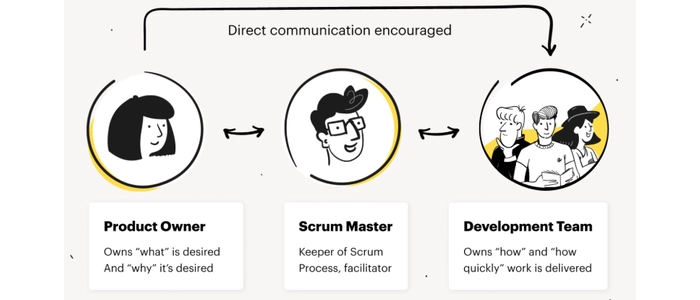
Scrum defines three roles, each with a distinct purpose:
- Product Owner
- Scrum Master
- Development Team
No more. No less.
The Product Owner: Owner of Value
The Product Owner (PO) is responsible for maximizing product value.
This role owns:
- The product backlog
- Prioritization
- Defining what success looks like
The PO decides what gets built and why.
A common failure mode is confusing symptoms with real problems. Strong Product Owners think in terms of causes, not noise. These perspectives help:
The Scrum Master: Owner of Flow
The Scrum Master is not a project manager.
This role exists to ensure Scrum is understood and applied correctly.
The Scrum Master:
- Removes impediments
- Facilitates Scrum events
- Coaches the team and stakeholders
When Scrum becomes ritual-heavy or bureaucratic, it’s often a sign that flow problems are being treated as rule problems.
Effective Scrum Masters rely on structured improvement thinking, such as:
- 5 Whys Problem Solving: How to Get to the Real Cause
- A3 Problem Solving: Step-by-Step Beginner Guide
The Development Team: Owner of Execution
The Development Team is responsible for delivering working increments.
This includes:
- Design
- Build
- Test
- Delivery
The team is self-managing, meaning no one outside the team assigns tasks.
Ownership of how work gets done lives here.
Why Role Clarity Matters
When roles blur, problems follow:
- Product Owners micromanage tasks
- Scrum Masters act as managers
- Teams wait for decisions instead of delivering
Clear roles create fast decisions and clean flow.
Scrum Roles vs Titles
Scrum roles are responsibilities — not job titles.
One person may hold multiple roles in small teams, but the responsibilities must still be fulfilled.
Ignoring a role doesn’t remove the work — it only hides it.
How Scrum Roles Fit into Scrum Events
Each role contributes differently during Scrum events.
For a full breakdown of those events, see: Scrum Ceremonies Explained: When and How They Work .
Measuring Flow and Delivery
Role clarity alone isn’t enough — teams also need to understand how work flows through the system.
These metrics explain what to watch:
- Lead Time vs Throughput: Which Metric Should You Track?
- Velocity vs Throughput: Why These Metrics Are Not the Same
Continuous Improvement and Scrum Roles
Scrum roles exist inside a learning cycle.
Teams that continuously inspect and adapt use structured loops like: PDCA Cycle Explained (Plan-Do-Check-Act Guide) .
Final Thought
Scrum roles are simple by design.
When each role owns its responsibility — and nothing else — teams move faster with less friction.
Clarity creates flow. Flow creates results.