
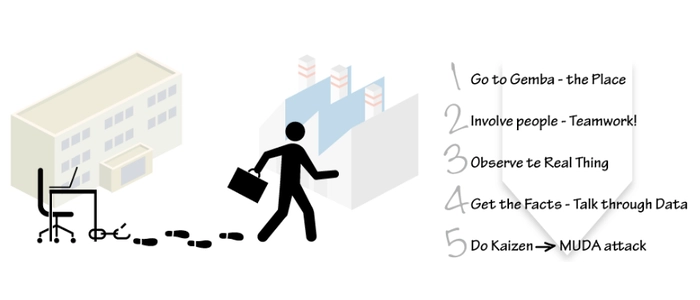
Gemba Walks: How to Lead by Seeing Reality
Most leadership decisions are made far away from where work actually happens.
That distance is where problems hide.
A gemba walk is a simple but powerful practice that closes this gap by bringing leaders directly to the source of value creation.
What Is a Gemba Walk?
“Gemba” is a Japanese word meaning the real place.
In Lean thinking, the gemba is where work is done — the shop floor, the office workflow, the service process.
A gemba walk is when leaders go to observe work as it happens, rather than relying on reports, dashboards, or assumptions.
What a Gemba Walk Is Not
Many teams misunderstand gemba walks.
A gemba walk is not:
- An audit
- A performance review
- A time to give instructions
The goal is learning, not judging.
Why Gemba Walks Matter
Processes rarely fail the way reports suggest they do.
By observing real work, leaders uncover:
- Hidden delays
- Workarounds
- Unclear priorities
- Overloaded teams
This firsthand insight is impossible to gain from meetings alone.
Seeing Waste in Action
Gemba walks make waste visible.
Waiting, rework, handoffs, and task switching become obvious when you watch work flow — or fail to flow.
To understand what to look for, start here: 8 Wastes of Lean: How to Find and Remove Them .
How to Run an Effective Gemba Walk
A good gemba walk follows a few simple principles:
- Go regularly, not occasionally
- Ask open-ended questions
- Listen more than you speak
- Focus on the process, not the person
The goal is understanding — not fixing everything immediately.
Questions to Ask During a Gemba Walk
Instead of telling people what to do, ask:
- What makes this work harder than it should be?
- Where does work get stuck?
- What causes rework?
- What would help you finish faster?
These questions invite insight rather than defensiveness.
Gemba Walks and Standard Work
Effective gemba walks are most powerful when paired with clear standards.
These practices help leaders observe against a known baseline:
- Standard Work: How to Create Reliable Processes
- How to Standardize Work Without Killing Creativity
- Leader Standard Work: A Practical Starter Guide
Workplace Organization and Gemba
Disorganized workplaces hide problems.
That’s why gemba walks often reveal opportunities tied to workplace organization: What Is 5S? Lean Workplace Organization Guide .
Gemba Walks at the Portfolio Level
While gemba walks often start at the team level, they also support better decision-making higher up.
Leaders responsible for multiple initiatives use gemba insights to improve prioritization and alignment across work streams.
These resources connect gemba learning to portfolio thinking:
- Portfolio Management for Teams: How to Manage Multiple Projects
- How to Build a Portfolio Kanban System
From Observation to Improvement
A gemba walk should always end with reflection.
What did you see?
What surprised you?
What questions remain unanswered?
These insights guide meaningful improvement — not surface-level fixes.
Final Thought
Great leaders don’t manage from a distance.
They go, see, and learn.
A gemba walk turns leadership into a practice grounded in reality — and that’s where real improvement begins.