Agile vs Waterfall: Which Method Is Right for Your Project?
Choosing the right project management approach can determine whether your project flows smoothly — or struggles from day one.
The Agile vs Waterfall debate isn’t about which method is better overall. It’s about which one fits your project’s uncertainty, constraints, and goals.
This guide breaks down both approaches clearly, shows when each one works best, and helps you make a confident decision.
What Is Waterfall Project Management?
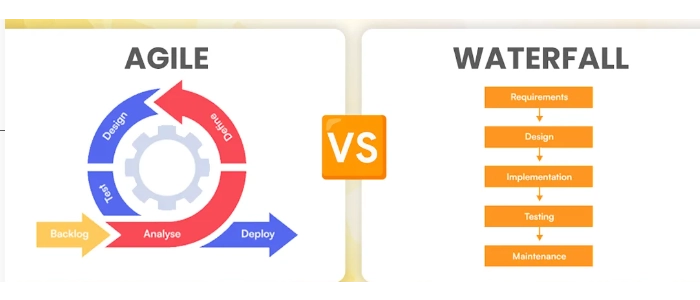
Waterfall is a linear, sequential approach to project management.
Work flows through fixed stages:
- Requirements
- Design
- Development
- Testing
- Delivery
Each phase must be completed before the next begins. Changes later in the process are costly and discouraged.
When Waterfall Works Best
- Requirements are stable and well-defined
- Regulatory or compliance constraints exist
- Scope changes are unlikely
- Predictability is more important than flexibility
Construction, manufacturing, and infrastructure projects often rely on Waterfall for this reason.
What Is Agile Project Management?
Agile is an adaptive, iterative approach focused on learning, feedback, and continuous delivery.
Instead of one long execution phase, work is broken into small increments that are planned, built, reviewed, and adjusted regularly.
Agile emphasizes:
- Customer feedback
- Cross-functional collaboration
- Continuous improvement
- Responding to change
When Agile Works Best
- Requirements are uncertain or evolving
- Fast feedback is critical
- Innovation and learning matter
- Teams can self-organize
Software development, product design, and knowledge work thrive in Agile environments.
Agile vs Waterfall: Key Differences
| Aspect | Waterfall | Agile |
|---|---|---|
| Planning | Upfront and fixed | Continuous and adaptive |
| Change | Discouraged | Expected |
| Delivery | At the end | Incremental |
| Risk | Discovered late | Exposed early |
Why Visualization Matters in Both Methods
No matter which approach you choose, visibility is critical.
Projects fail not because of methodology — but because teams lose sight of:
- Actual progress
- Hidden bottlenecks
- Competing priorities
Visual project management makes work explicit and decisions easier.
Explore why visibility consistently outperforms tracking alone:
Visual Project Management: Why Seeing Work Beats Tracking Work
Work Visualization: Why Seeing Work Improves Results
Visual Workflows: How Seeing Work Improves Decision Making
Hybrid Reality: Most Teams Use Both
In practice, many teams blend Agile and Waterfall.
Examples include:
- Waterfall planning with Agile execution
- Fixed milestones with flexible scope
- Portfolio-level predictability with team-level agility
What matters is not purity — but alignment.
Aligning Method, Goals, and Metrics
Methodology must support outcomes.
If your goals focus on learning, adaptability, and speed, Agile aligns naturally — especially when paired with visual systems and clear metrics.
These resources help align execution with strategy:
How to Build an Agile Team Operating System
Agile OKRs: How to Align Goals with Daily Execution
Final Thoughts
Agile and Waterfall are tools — not ideologies.
The right choice depends on uncertainty, risk, feedback needs, and organizational maturity.
Choose the method that makes problems visible early, supports learning, and helps your team deliver real value — consistently.