
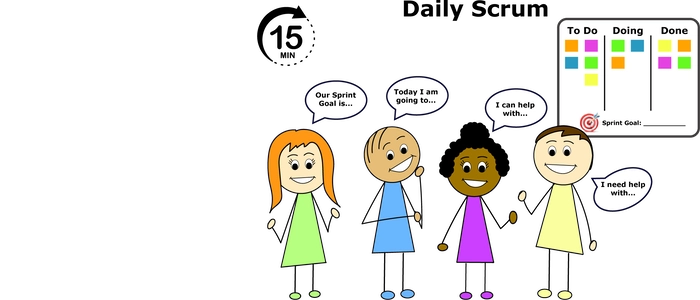
How to Run a Daily Scrum (Standup) That Actually Works
Most daily scrums don’t fail because teams skip them.
They fail because they turn into status meetings.
A daily scrum is not a report to management. It is a short, focused planning event designed to help the team align, surface blockers, and keep work flowing.
This guide explains how to run a daily scrum that actually works — and why most teams get it wrong.
What the Daily Scrum Is (and Is Not)
The daily scrum is a team planning meeting. Its purpose is to help the team decide how to move work forward over the next 24 hours.
It is not:
- A status update for stakeholders
- A problem-solving workshop
- A detailed technical discussion
When the daily scrum loses its focus, it becomes noise instead of value.
The Real Goal of a Daily Scrum
A good daily scrum helps the team answer three critical questions:
- Are we still aligned on our goal?
- Is work flowing or getting stuck?
- What needs to change today?
Notice that these questions are about the work, not individual performance.
Why Most Daily Scrums Don’t Work
Common reasons daily scrums fail:
- People speak to the Scrum Master instead of the team
- Updates focus on effort instead of progress
- Blockers are mentioned but not addressed
- The board is ignored
When work is invisible, conversations become abstract. This is why visualizing work is essential.
Use the Board as the Center of the Meeting
The daily scrum should happen in front of the board.
The board represents reality. Conversations should follow the flow of work from right to left — starting with what is closest to completion.
This keeps the team focused on finishing work instead of starting more.
If your team needs a refresher on Scrum fundamentals, start here: What Is Scrum? A Complete Beginner’s Overview .
Ask Better Questions
The classic standup format only works when questions drive flow — not reporting.
Guide the discussion with questions like:
- What is closest to being done?
- What is blocked right now?
- Are we overloaded anywhere?
This shifts the focus from people to progress.
Reduce Multitasking and Task Switching
Daily scrums often fail when teams are juggling too many things at once.
These articles explain why multitasking destroys momentum:
- Task Switching: The Productivity Killer in Disguise
- The Hidden Cost of Multitasking (Lean Perspective)
Make Work Visible
Teams perform better when work is visible, shared, and easy to discuss.
These perspectives explain why visualization matters:
- Work Visualization: Why Seeing Work Improves Results
- Visual Project Management: Why Seeing Work Beats Tracking Work
Connect the Daily Scrum to Sprint Goals
A daily scrum without a clear sprint goal quickly becomes routine noise.
Teams should regularly connect daily decisions to sprint objectives to ensure effort translates into progress.
If sprint alignment is weak, this guide helps reset expectations: Sprint Planning Guide: How to Run a High-Impact Sprint .
Signs Your Daily Scrum Is Working
- Blockers are surfaced early
- Work finishes faster
- Less work gets stuck mid-flow
- The team leaves with clarity
A good daily scrum creates momentum — not compliance.
The Daily Scrum Is a Tool, Not a Ritual
When done right, the daily scrum becomes one of the most powerful coordination tools a team has.
When done wrong, it becomes a habit everyone tolerates.
Keep it visual. Keep it focused. Keep it about the work.