
Task Switching: The Productivity Killer in Disguise
Task switching looks productive.
Emails get answered. Messages get replied to. Multiple items move forward — at least on the surface.
But beneath that activity, productivity quietly collapses.
Task switching is one of the most expensive and least visible forms of waste in modern teams.
What Is Task Switching?
Task switching happens when people repeatedly shift attention between different types of work.
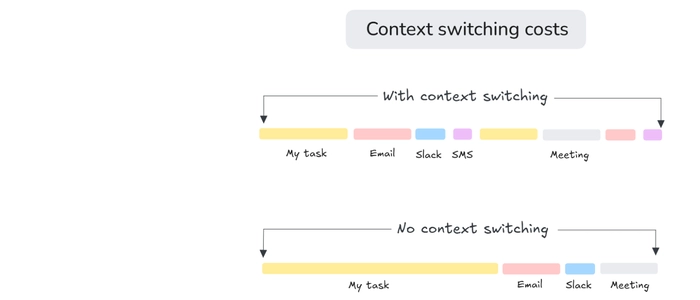
It’s not the same as doing multiple tasks over a day. The real problem is rapid context switching — bouncing between unrelated tasks before any of them are finished.
Each switch forces the brain to reload context, decisions, and intent.
Why Task Switching Feels Productive
Task switching creates the illusion of progress.
- Many items are “in progress”
- People stay busy all day
- Activity is constant
But activity is not output.
Most teams confuse movement with progress.
The Hidden Cost of Task Switching
Every time attention shifts, productivity drops.
Task switching increases:
- Lead time
- Error rates
- Mental fatigue
And it decreases:
- Flow
- Quality
- Throughput
This is why teams that appear busy often deliver slower than expected.
Task Switching Is a Flow Problem
From a Lean perspective, task switching breaks flow.
When work constantly stops and restarts, momentum disappears. Tasks sit idle while attention is elsewhere.
Flow metrics make this visible. This explainer shows how to quantify the impact: Flow Efficiency Formula (Explained So Anyone Can Use It) .
Why Task Switching Destroys Throughput
When teams start more work than they can finish, queues grow.
This increases waiting time and stretches delivery cycles.
The difference between demand and completion speed explains why throughput collapses: Takt Time vs Throughput: Why They’re Not the Same .
Why Teams Keep Switching Tasks
Task switching usually isn’t a discipline problem — it’s a system problem.
Common causes include:
- Too many active priorities
- Lack of work limits
- Interrupt-driven cultures
- Invisible bottlenecks
Without visibility, teams underestimate how overloaded they really are.
Leveling Work to Reduce Switching
One of the most effective ways to reduce task switching is to level work.
Leveling smooths demand so teams can focus instead of firefighting. This concept is explained here: Heijunka Explained: How Level Loading Reduces Chaos .
Using Time-Based Signals
Time-based metrics help teams align work to capacity instead of urgency.
These explainers show how time concepts connect to focus and flow:
Reducing Task Switching at Scale
At higher levels, task switching often comes from poor portfolio design.
When too many initiatives run at once, teams are forced to multitask.
These systems help leaders reduce switching across teams:
- What Is a Project Portfolio Board? (Beginner Guide)
- How to Build a Portfolio Kanban System
- How to Create a Pull-Based Project Management System
Small Changes, Big Impact
Teams don’t need massive transformations to reduce task switching.
Clear priorities, visible work, and finishing discipline often unlock immediate gains.
The hardest part is recognizing the problem — because task switching hides in plain sight.