Heijunka Explained: How Level Loading Reduces Chaos
Many teams don’t have a “people problem.” They have a workload volatility problem.
When work arrives in bursts, priorities swing, and everything becomes urgent, the system starts to break: context switching rises, queues grow, lead times explode, and quality suffers.
Heijunka (level loading) is one of Lean’s most effective answers to that chaos. It smooths the release of work so teams can deliver faster, more predictably, and with less stress.
What Is Heijunka? (Simple Definition)
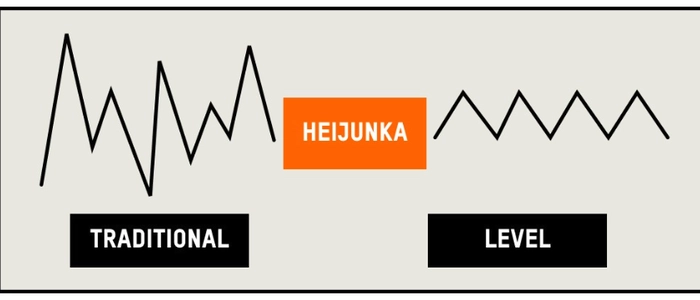
Heijunka is a Lean method for leveling the volume and/or mix of work over time. Instead of doing “a lot now, nothing later,” you spread work more evenly.
The goal isn’t to do less work — it’s to reduce variability so the system can flow.
Why Uneven Work Creates Chaos
Most operational pain comes from variability. When demand spikes, teams respond with:
- Starting too many things at once (high WIP)
- Over-prioritizing “urgent” work (constant reshuffling)
- Skipping standard steps (quality drops)
- Working longer hours (burnout)
Then, when demand drops, teams scramble to “catch up,” report, replan, or shift focus again — and the cycle repeats.
How Heijunka Reduces Chaos
1) Lower WIP, less multitasking
Level loading reduces the pressure to start everything immediately. When you release work in smaller, steady amounts, WIP naturally stays lower — and people can finish more.
2) Shorter and more predictable lead times
Queues are what stretch lead time. Heijunka limits queue growth by controlling the release rate, making delivery times more consistent.
3) Fewer bottlenecks and firefights
Bottlenecks become worse when work arrives in waves. Level loading prevents the system from being overwhelmed, so bottlenecks are easier to spot and improve — instead of being “hidden” inside overload.
4) Better quality and fewer rework loops
When teams are overloaded, they cut corners. Heijunka stabilizes the workload so teams can follow standard work, verify quality, and reduce rework.
5) Less stress, higher morale
A steady pace is psychologically safer. Level loading reduces the “panic culture” that comes from surprise surges and unrealistic deadlines.
Two Types of Level Loading
Leveling volume
This is smoothing how much work enters the system. Example: instead of releasing 40 tasks on Monday and 5 tasks the rest of the week, you release ~10 per day.
Leveling mix
This is smoothing the type of work. Example: rather than doing “all urgent fixes” for two days and “all new features” for three days, you balance the mix daily to prevent neglect and big swings.
Heijunka in Knowledge Work (Not Just Manufacturing)
Heijunka started in manufacturing, but the logic applies perfectly to modern knowledge work:
- Product teams overloaded by feature requests
- Ops teams flooded by tickets at month-end
- Marketing teams stuck in campaign “crunch weeks”
- Leadership teams managing too many initiatives at once
If your work arrives in bursts, Heijunka can help — even if you’re not building physical products.
How to Apply Heijunka Step-by-Step
Step 1: Identify your demand pattern
Look at the last 4–8 weeks. Where do spikes occur?
- Start-of-week overload?
- End-of-month panic?
- “Big-batch” planning cycles?
Step 2: Set a release cadence
Choose a simple rhythm for when work enters the system (daily, twice weekly, weekly). The key is consistency.
Step 3: Control intake using a “Ready” buffer
Create a small “Ready” column or queue with a strict limit. This prevents dumping 50 items into active work. Keep it small and curated.
Step 4: Use WIP limits to protect flow
Heijunka works best when paired with WIP limits. If work is level-loaded but everyone still starts too much, chaos returns quickly.
Step 5: Balance the mix intentionally
Define categories (examples):
- Customer requests
- Defects / incidents
- Planned improvements
- Strategic initiatives
Then set a simple “mix rule,” like: 60% planned work / 20% defects / 20% improvement (adjust as needed).
Step 6: Review weekly and adjust
Level loading is not “set and forget.” Review what happened and tune the release rate or mix. The goal is stable flow, not perfect forecasting.
Common Mistakes to Avoid
- Leveling the plan, not the system: if intake stays chaotic, the board becomes cosmetic.
- Batching anyway: doing weekly intake but releasing everything at once defeats the purpose.
- Ignoring true capacity: leveling doesn’t create extra capacity — it protects the capacity you already have.
- No visual control: without a visible board, teams can’t see the load or protect flow.
How Visual Management Supports Heijunka
Heijunka is easier when work is visible. A visual board helps you:
- See overload immediately
- Protect WIP limits
- Manage intake and release with discipline
- Spot patterns (spikes, recurring blockers, unstable mix)
Related Reading
- How to Build an Agile Team Operating System
- Agile Estimation Techniques: Which One Actually Works?
- Agile OKRs: How to Align Goals with Daily Execution
- Agile vs Waterfall: Which Method Is Right for Your Project?
- Scrum Roles Explained: Who Does What on an Agile Team?
- What Is Yokoten? How Great Teams Share Improvement
- Lean Culture vs Lean Tools: What Actually Drives Change
- How to Sustain Improvements Over Time
Final Thoughts
If your team feels overloaded, it may not be because you have too much work — it may be because work arrives too unevenly.
Heijunka reduces chaos by smoothing demand, protecting flow, and creating a sustainable pace. When work is level-loaded, teams deliver faster, quality improves, and planning stops feeling like a constant emergency.