
Sprint Planning Guide: How to Run a High-Impact Sprint
Sprint planning is one of the most important — and most misunderstood — events in Scrum.
When sprint planning is done well, teams leave with clarity, confidence, and a realistic plan for delivering value. When it’s done poorly, sprints start with confusion, overload, and misaligned expectations.
This guide breaks down sprint planning step by step, explaining what it is, how it works, and how to run a sprint planning session that actually sets your team up for success.
What Is Sprint Planning?
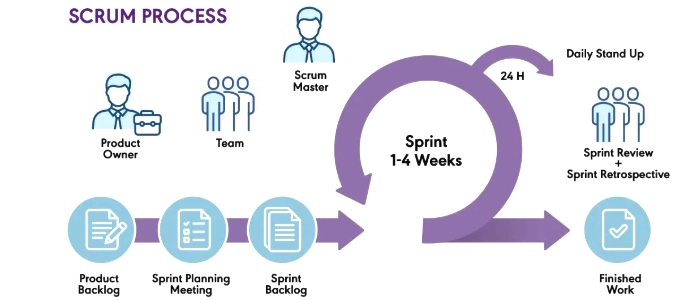
Sprint planning is a Scrum event where the team decides what work will be completed during the upcoming sprint and how that work will be done.
It happens at the start of every sprint and creates a shared commitment between the Product Owner, Scrum Master, and Development Team.
During sprint planning, the team answers two fundamental questions:
- What can we deliver in this sprint?
- How will we deliver it?
Sprint planning is one of the five official Scrum ceremonies. If you want the full context, start here: Scrum Ceremonies Explained: When and How They Work
Who Participates in Sprint Planning?
Sprint planning involves the entire Scrum Team:
- Product Owner – Presents priorities and clarifies backlog items
- Scrum Master – Facilitates the event and ensures Scrum principles are followed
- Development Team – Estimates work and commits to the sprint goal
Each role has a clear responsibility. If roles feel blurry, this breakdown helps: Scrum Roles Explained: Who Does What on an Agile Team?
How Long Should Sprint Planning Take?
Sprint planning is time-boxed. The Scrum Guide recommends:
- 2 hours per week of sprint length
For example:
- 1-week sprint → up to 2 hours
- 2-week sprint → up to 4 hours
Teams don’t need to use the full timebox — but rushing sprint planning often leads to unrealistic commitments and poor execution.
Step-by-Step: How to Run Sprint Planning
Step 1: Review the Product Backlog
The Product Owner presents the highest-priority backlog items and explains their business value.
At this stage, the team should:
- Understand the goal behind each item
- Ask clarifying questions
- Confirm acceptance criteria
If backlog items aren’t clear, sprint planning will stall — preparation matters.
Step 2: Define the Sprint Goal
The sprint goal explains why the sprint matters.
A good sprint goal:
- Provides focus and direction
- Connects tasks to customer value
- Allows flexibility in execution
The sprint goal should be simple, outcome-focused, and understood by everyone.
Step 3: Select Sprint Backlog Items
The team pulls items from the product backlog into the sprint backlog based on:
- Priority
- Team capacity
- Historical performance
This is a team decision — not something assigned by the Product Owner.
Step 4: Estimate the Work
Scrum teams typically estimate work using story points rather than hours.
Story points focus on relative effort, complexity, and risk — not time prediction.
To understand estimation approaches:
- Story Points vs Hours: Which Should Your Team Use?
- Agile Estimation Techniques: Which One Actually Works?
Step 5: Confirm Capacity and Commitment
Before finalizing the sprint plan, the team checks:
- Available capacity (vacations, meetings, support work)
- Realistic workload
- Dependencies or risks
The sprint backlog should feel ambitious — but achievable.
The Role of the Scrum Board in Sprint Planning
A Scrum board makes sprint planning tangible.
Visualizing sprint backlog items helps teams:
- See workload distribution
- Spot bottlenecks early
- Create shared understanding
If you’re new to Scrum boards, start here: What Is a Scrum Board? Full Walkthrough for Beginners
Common Sprint Planning Mistakes
Even experienced teams fall into these traps:
- Overcommitting based on optimism
- Skipping backlog refinement
- Estimating without discussion
- Turning sprint planning into a status meeting
High-impact sprint planning is collaborative, focused, and grounded in reality.
Velocity vs Reality
Some teams rely too heavily on past velocity to plan sprints.
Velocity is a helpful signal — but not a promise. Capacity changes, work varies, and uncertainty is normal.
To understand the difference between output metrics, read: Velocity vs Throughput: Why These Metrics Are Not the Same
Final Thoughts
Sprint planning isn’t about predicting the future — it’s about creating alignment, focus, and a shared commitment for the next sprint.
When teams prepare well, estimate collaboratively, and use visual tools to support discussion, sprint planning becomes a powerful launchpad for delivery.
Plan realistically. Commit together. Improve every sprint.