
Queueing Theory for Agile Teams (Beginner-Friendly)
Ever wonder why adding “just one more task” makes everything feel slower?
That’s not bad luck. It’s queueing theory — the science of why work piles up, lead times stretch, and teams get stuck in traffic jams of tasks.
The good news: you don’t need a math degree to use queueing theory. In this guide, you’ll learn the few core ideas that explain most Agile flow problems — and exactly what to do about them.
What Is Queueing Theory (In Agile Terms)?
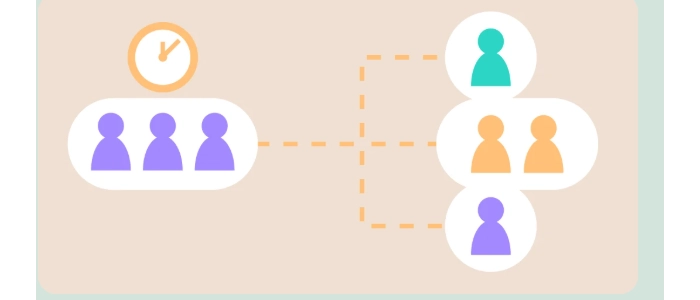
Queueing theory is the study of how work items wait in line for a shared resource.
In Agile teams, the “line” is your backlog, your In Progress column, review queues, testing queues, deployment queues — and the shared resources are people, tools, or bottlenecks like approvals.
In other words:
When demand hits a system faster than it can be completed, a queue forms — and waiting time grows.
Why Agile Teams Should Care
Most teams try to go faster by:
- starting more work
- pushing harder
- adding meetings
- asking for “status updates” more often
Queueing theory says the opposite is usually true:
To finish more, you often need to start less.
The Big Idea: Utilization Drives Delay
Here’s the single most important concept:
As utilization approaches 100%, waiting time explodes.
If a person, team, or function is constantly “fully busy,” then any variability (urgent requests, defects, rework, dependency delays) creates a backlog. That backlog becomes a queue. And the queue becomes longer lead time.
Think of it like freeway traffic:
- At 40% capacity, traffic flows smoothly.
- At 80%, a small slowdown causes a ripple.
- At 95–100%, one tap of the brakes can create a traffic jam that lasts hours.
Knowledge work behaves the same way.
Why “More WIP” Slows Delivery
When teams take on too many items at once (high WIP), three things happen:
- Context switching increases (more setup time, more mental load).
- Queues form between steps (review, test, approvals become overloaded).
- Lead time grows even if total output doesn’t.
This is why teams often feel busy but deliver slowly: the work is “in the system,” but it’s mostly waiting.
The Two Levers You Actually Control
Queueing theory gives Agile teams two practical levers:
1) Reduce Variability (When Possible)
Variability is anything unpredictable that changes arrival rate or service time:
- unclear requirements
- rework and defects
- interruptions and urgent requests
- large story sizes
- handoffs and approvals
You can’t remove all variability, but you can reduce it by:
- splitting work smaller
- using clear definitions of done
- improving discovery and refinement
- removing avoidable handoffs
2) Reduce Utilization / WIP
This is the fastest win for most teams.
Lower WIP creates “slack” — and slack absorbs variability. That reduces queue length, which reduces lead time.
Practical ways to reduce WIP:
- set explicit WIP limits per column
- stop starting, start finishing
- swarm to unblock stuck items
- limit expedite/urgent items
A Simple Example (No Math)
Imagine a team that can complete 10 items per week on average.
- If you feed the system ~10 items/week, it might look stable — until variability hits.
- If one week takes longer (bugs, interruptions), work piles up.
- Once piled up, even normal weeks can’t fully recover because the queue is already there.
The team doesn’t need “more pressure.” They need less WIP and more flow.
Queueing Theory Explains Why Batch Work Hurts
Big batches create big queues.
When work moves in large chunks (big stories, big releases, big “handoff packages”), everything waits longer before it can move. Smaller batches reduce waiting time and increase feedback speed.
This is why Lean and Kanban push:
- smaller stories
- continuous delivery
- limit WIP
- optimize flow
What to Do on Your Kanban Board This Week
If you want immediate improvement, do these three steps:
- Add WIP limits to your In Progress and Review/Test columns.
- Track aging work items (how long each card has been in progress).
- Make “blocked” visible and swarm to unblock before starting new work.
This makes queues visible, forces finishing behavior, and reduces waiting time — the core goal of queueing theory applied to Agile.
Recommended Reading
Same-category links (as provided):
- Velocity vs Throughput: Why These Metrics Are Not the Same
- Lead Time vs Throughput: Which Metric Should You Track?
- Flow Efficiency: The Metric That Shows True Productivity
- Little’s Law Explained: Why Flow Is Predictable
- How to Improve Team Throughput Without Adding Headcount
Cross-category links (as provided):
- Queueing Theory for Agile Teams (Beginner-Friendly)
- Little’s Law Explained: Why Flow Is Predictable
- The Theory of Constraints: How to Fix the One Thing Blocking You
Final Thoughts
Queueing theory explains a pattern Agile teams experience constantly:
When you load the system too heavily, you don’t get more output — you get more waiting.
If you want faster delivery and more predictability, the path is usually:
- reduce WIP
- reduce variability
- focus on flow, not “busyness”
And the best part? You can start today — with nothing more than a visible board and a commitment to finish work before starting more.