What Is Value? (Lean Thinking for Everyone)
Lean is often explained with tools — 5S, Kaizen, standard work, value stream maps — but all of those tools exist for one reason:
To deliver more value with less waste.
That sounds simple… until you try to answer the most important Lean question:
What exactly is “value”?
In this beginner-friendly guide, you’ll learn what value means in Lean thinking, how to define it clearly, and how to use it as the filter for better decisions, better processes, and better results.
Lean Value: The Core Definition
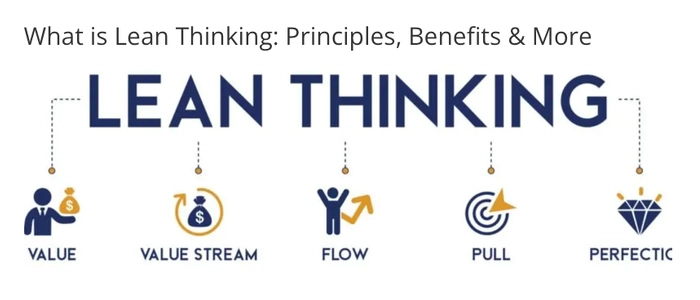
In Lean, value is defined by the customer.
Something is “value” only if it meets all three conditions:
- The customer cares about it (it solves a real need).
- It changes the product/service in a meaningful way.
- It is done right the first time (no rework needed).
If any of those are missing, the activity may still be necessary — but it isn’t value.
Why This Matters: Most Work Isn’t Value-Add
Here’s a hard truth Lean reveals:
In many processes, the majority of time is spent not adding value — but waiting, moving, searching, reworking, and coordinating.
When you start seeing work through the lens of value, you stop optimizing “busyness” and start optimizing outcomes.
The 3 Types of Work in Lean
Lean generally sorts work into three categories:
1) Value-Added Work
This is the work the customer would willingly “pay for” because it directly creates what they want.
Examples: assembling a product, writing code that enables a feature, delivering a service step that solves the customer’s problem.
2) Non-Value-Added Work
This work doesn’t create what the customer wants, and it’s not necessary. It exists because of poor design, inefficiency, or outdated habits.
Examples: unnecessary approvals, rework, excessive handoffs, searching for information, producing reports nobody uses.
3) Necessary Non-Value-Added Work
This doesn’t create customer value, but it’s required right now due to constraints like compliance, safety, contracts, or current system limitations.
Examples: regulatory documentation, mandatory inspections, certain billing/admin steps.
The Lean goal isn’t to pretend necessary steps don’t exist — it’s to reduce or simplify them while eliminating the truly unnecessary.
Value Is a Perspective — Not an Opinion
One of the biggest mistakes teams make is defining value from inside the organization:
- “Value is what keeps our people busy.”
- “Value is what our manager wants to see.”
- “Value is what our system makes easy.”
Lean flips the perspective:
Value is what the customer needs, in the time they need it, in the quality they expect.
If you’re not sure what the customer values, the best Lean move is to clarify the customer’s definition before improving the process.
How to Define Value Clearly (A Simple Checklist)
If you’re trying to define value for a product, service, or workflow, ask:
- Who is the customer? (Internal or external?)
- What problem are they trying to solve?
- What outcome do they actually want?
- What “good” looks like? (quality criteria)
- When do they need it? (timing/lead time expectations)
Then turn that into a one-sentence definition:
“Value is delivering ________ (outcome) to ________ (customer) with ________ (quality) by ________ (time).”
Value vs. Waste: How Lean Uses the Definition
Once you define value, everything else becomes easier because you can measure your work against it:
- If it creates customer value — protect it and make it flow.
- If it doesn’t create value — challenge it.
- If it’s necessary but non-value — simplify it.
This is exactly why Lean loves visualization: when work is visible, waste becomes harder to ignore.
Examples of Value in Different Settings
Manufacturing
- Value: transforming materials into the finished product to spec.
- Not value: moving parts around, waiting for a machine, rework, overproduction.
Office / Knowledge Work
- Value: completing the decision, solving the customer’s issue, shipping the feature.
- Not value: status meetings with no decisions, searching for files, approvals that add no quality, context switching.
Service Work
- Value: the step that resolves the client’s need correctly and quickly.
- Not value: repeated transfers, waiting in queues, re-entering data, unnecessary follow-ups.
How to Increase Value Delivered (Without Working Harder)
Lean improvement is usually about:
- Reducing delays (queues, waiting, handoffs)
- Reducing variation (inconsistent steps, unclear standards)
- Reducing rework (errors, missing information, unclear requirements)
- Reducing overload (too much WIP, too many priorities at once)
When those shrink, value becomes a bigger percentage of the total time — even if the value-added steps stay the same.
Use a Visual Board to Protect Value and Expose Waste
One reason Lean teams love visual management is that it makes the gap between “work happening” and “value delivered” obvious.
- Work piles up in queues.
- Blocked tasks become visible.
- Handoffs and bottlenecks show up instantly.
When value is the target, your board becomes more than a tracker — it becomes a decision tool.
Recommended Reading
Cross-category links (as provided):
- What Is Value? (Lean Thinking for Everyone)
- Lean Culture vs Lean Tools: What Actually Drives Change
- The Complete Guide to Lean Transformation
Same-category links (as provided):
- Kanban Maturity Levels: Where Is Your Team?
- What Makes a Good Kanban Board? (Real Examples)
- Kanban Board Examples from Real Teams
- Kanban Flow vs Batch Processing: What’s Faster?
- Kanban Metrics That Actually Matter (And Which Don’t)
Final Thoughts
Lean value is not about doing more. It’s about doing more of what matters — and less of what doesn’t.
When you define value clearly, you gain a powerful filter for improvement: keep what the customer truly wants, simplify what’s necessary, and remove what’s wasteful.
If you want to operationalize this daily, the fastest way is to make work visible — so you can see where value is flowing and where it’s getting stuck.