Daily Management Boards: How Leaders Stay Aligned
When teams feel “busy” but results feel inconsistent, the problem usually isn’t effort — it’s alignment.
Daily Management Boards solve that by making the most important work visible, trackable, and actionable every single day. They give leaders and teams a shared truth: what matters, what’s changing, what’s stuck, and what we’re doing about it.
What Is a Daily Management Board?
A Daily Management Board is a visual leadership tool used to:
- Align priorities and expectations
- Track key performance indicators (KPIs) daily
- Surface issues early (before they become fires)
- Drive structured problem solving
- Build a consistent cadence of accountability
Think of it as a daily “control center” for a team, department, or work area — where performance and problems are managed in real time.
Why Daily Boards Keep Leaders and Teams Aligned
1) They create one shared reality
Without a shared visual, alignment becomes opinion-based. A daily board makes performance and priorities obvious, so discussions shift from “I think” to “Here’s what we see.”
2) They shorten feedback loops
Daily tracking reveals trends immediately. If a metric slips today, you don’t wait until the weekly report — you respond while there’s still time to recover.
3) They prevent “hidden work” and silent overload
When work, blockers, and capacity are visible, leaders can spot overload early, rebalance responsibilities, and remove obstacles before productivity drops.
4) They strengthen continuous improvement culture
A daily board makes improvement normal. Teams stop treating problems like personal failures and start treating them like opportunities to learn and improve.
What to Include on a Daily Management Board
A great daily management board is not complicated — it’s focused. Here are the most effective sections to include:
1) Daily KPIs (a few that truly matter)
Choose 3–7 key measures that reflect performance. Examples:
- On-time delivery
- Quality (defects, rework, errors)
- Throughput / output
- Lead time / cycle time (if relevant)
- Safety incidents / near misses
- Customer satisfaction signals
Tip: Include a simple target and a clear visual indicator for “met / not met.”
2) Plan vs Actual
This is one of the fastest ways to create alignment. When teams see the plan and the real outcome side by side, conversations become honest and productive.
3) Today’s priorities
List the top priorities for the day (or shift). Keep it short. If everything is a priority, nothing is.
4) Issues / obstacles (with owners)
Where are we stuck? What’s preventing success today? Track issues with:
- Short description
- Owner
- Status (open / in progress / resolved)
- Next action
5) Actions and follow-through
Without actions, a board becomes a report. Make follow-through visible with a simple action list and deadlines.
The Daily Cadence That Makes It Work
A daily management board becomes powerful when it’s used consistently — not when it’s “updated when we have time.”
Run a 10–15 minute daily huddle
Use the board as the agenda. A simple structure:
- Review KPIs: What changed since yesterday?
- Call out abnormalities: What is off-target or at risk?
- Identify obstacles: What’s blocking the plan?
- Assign actions: Who will do what, by when?
- Escalate fast: If the team can’t solve it, raise it immediately.
The goal isn’t to “talk about work.” The goal is to remove friction so work flows.
How Daily Boards Connect to Problem Solving
Daily boards reveal problems. Structured methods solve them.
When an issue repeats, the board should trigger deeper problem solving:
- Use 5 Whys for quick cause discovery
- Use PDCA to test improvements safely
- Use A3 when problems are complex or cross-functional
This creates a healthy loop: See → Understand → Improve → Standardize.
Common Mistakes to Avoid
- Too many metrics: Track what drives decisions, not what fills space.
- Reporting without action: If nothing changes after review, the board loses credibility.
- No ownership: Issues without owners become permanent.
- Inconsistent use: A daily board must be daily to build trust and rhythm.
- Making it “leadership-only”: The best boards are owned by the team, not policed by managers.
How PMXBOARD Helps Teams Run Daily Management Visually
Daily management works best when the system is easy to update and easy to read.
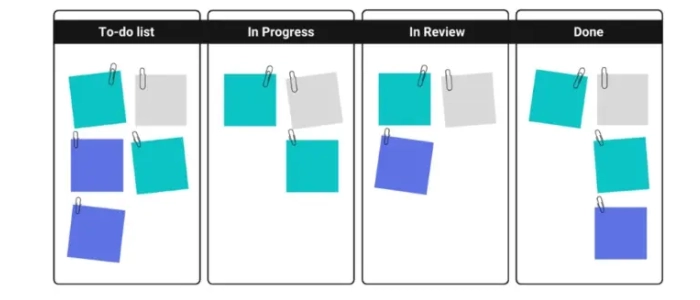
Physical visual tools (boards + reusable magnetic cards) keep performance and priorities visible at all times — not hidden behind dashboards. Leaders can walk up, see status instantly, and hold short, effective huddles that keep teams aligned.
Related Reading
- A3 Problem Solving: Step-by-Step Beginner Guide
- Root Cause vs Symptom: How to Think Like an Improver
- PDCA Cycle Explained (Plan-Do-Check-Act Guide)
- 5 Whys Problem Solving: How to Get to the Real Cause
- Kaizen vs Innovation: Why Continuous Beats Occasional
- Kaizen Metrics: What You Should Track (and Ignore)
Final Thoughts
A Daily Management Board isn’t just a board — it’s a leadership habit.
When teams can see performance, priorities, and problems in one place, alignment becomes natural. Decisions speed up. Accountability improves. And continuous improvement stops being a slogan — it becomes part of daily work.