
Small Wins: Micro-Kaizen in Practice
Big transformations rarely happen in one dramatic leap.
They happen through small wins—tiny improvements repeated daily until the process (and the culture) shifts for good. That’s the heart of Micro-Kaizen: practical, low-risk improvements that teams can implement immediately, without waiting for a major “Kaizen event” or leadership approval cycles.
In this article, you’ll learn what Micro-Kaizen is, why it works so well, and how to build a simple system to capture, test, and sustain small improvements in real life.
What Is Micro-Kaizen?
Micro-Kaizen is continuous improvement in its smallest useful form—quick, everyday improvements that remove friction, reduce waste, and make work easier.
Instead of launching a big improvement project, Micro-Kaizen focuses on changes like:
- reducing a recurring delay
- removing an unnecessary step
- making a standard easier to follow
- clarifying a handoff
- organizing tools or information so people can find them fast
These changes might feel “too small to matter,” but over time they compound—and that compounding effect is the real power.
Why Small Wins Work (Better Than Big Change)
1) Small Improvements Lower Resistance
Teams often resist big change because it feels risky, disruptive, and uncertain. Micro-Kaizen avoids that problem. When the change is small, people are more willing to try it—because the cost of failure is low.
2) Micro-Kaizen Builds Momentum
When teams see improvements actually happen (quickly), motivation rises. Micro-Kaizen creates a steady rhythm of progress, instead of long periods of “planning” with no visible payoff.
3) It Creates a Learning Culture
Micro-Kaizen treats improvement like a habit and a skill. The team gets better at noticing problems, testing ideas, and learning from results—without blaming people.
4) Small Wins Compound Into Big Results
One improvement might save 30 seconds. That doesn’t sound impressive—until it happens 50 times a day, across multiple people, every week. Micro-Kaizen’s advantage is that it scales through repetition.
What Micro-Kaizen Looks Like in Practice
Here are real-world examples of Micro-Kaizen in action:
- Fewer interruptions: create a “quiet focus” signal for deep work times
- Cleaner handoffs: add a simple checklist before moving work to the next step
- Less searching: label common materials, files, or tools (visual organization)
- Faster meetings: shorten updates to “Progress / Blockers / Next” only
- Reduced rework: define “done” more clearly with one sentence and one example
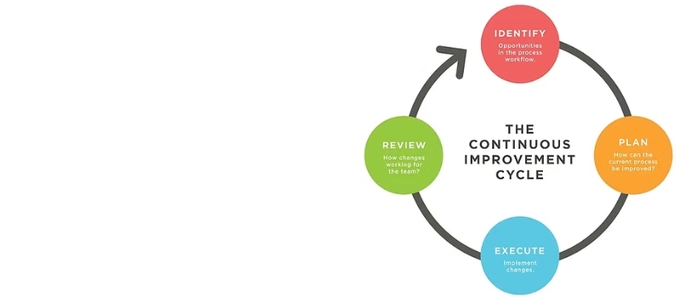
The Micro-Kaizen Loop
If Micro-Kaizen is going to work, it needs a repeatable loop. Here’s a simple one that teams can actually maintain:
Step 1: Notice the Friction
Micro-Kaizen starts with awareness. Encourage your team to capture small frustrations as they happen:
- “We always wait for approvals.”
- “We keep asking the same questions.”
- “This step takes longer than it should.”
- “We lose time switching tools.”
Friction is improvement data.
Step 2: Write the Idea Clearly
Keep improvement ideas short and specific. A good Micro-Kaizen idea answers:
- What problem are we solving?
- What small change will we try?
- What result do we expect?
Step 3: Run a Tiny Test (Not a Big Project)
Micro-Kaizen works best as an experiment. Try it for a short window—like 1 day or 1 week. The goal is to learn fast, not be perfect.
Step 4: Check the Result
After the test, ask:
- Did it reduce waste or friction?
- Did it make work easier or clearer?
- Did it improve quality or flow?
If yes, keep it. If no, adjust or discard. Either outcome is progress because the team learned.
Step 5: Standardize the Win
Small wins disappear if they aren’t captured. If the change worked, make it part of the process:
- update a checklist
- add a simple standard
- create a visual cue
- document the “new way” in one sentence
How to Make Micro-Kaizen Stick
Keep the Bar Low
If Micro-Kaizen feels like extra work, it will die. Keep the system lightweight. The point is improvement that fits inside real life.
Make Improvements Visible
Visibility builds energy. When improvements are seen, they reinforce identity: “We are a team that improves.” A visual board helps you track:
- ideas
- tests in progress
- wins implemented
- measured outcomes
Celebrate Small Wins as Real Wins
Micro-Kaizen thrives on recognition. A 2-minute weekly “win review” can keep the habit alive—especially when leaders model appreciation for small improvements.
Common Micro-Kaizen Mistakes to Avoid
- Turning every idea into a project: keep it small and test quickly
- Waiting for perfect data: use simple before/after observations
- Not standardizing wins: improvements fade if they aren’t captured
- Blaming people: focus on processes, not individuals
Final Thoughts
Micro-Kaizen is how continuous improvement becomes real—not a slogan. By focusing on small wins, teams build confidence, reduce waste, and strengthen a culture where progress happens every day.
If you want sustainable improvement, don’t wait for the perfect time or the perfect project. Start with one small friction point, test one small change, and lock in one small win. Then repeat.
Related Articles
- Visual Management Boards: Examples & Templates
- Why Visual Management Outperforms Digital Tools
- Visual Workflows: How Seeing Work Improves Decision Making