
The Science of Bottlenecks: Why Work Gets Stuck
Bottlenecks aren’t bad luck—they’re physics.
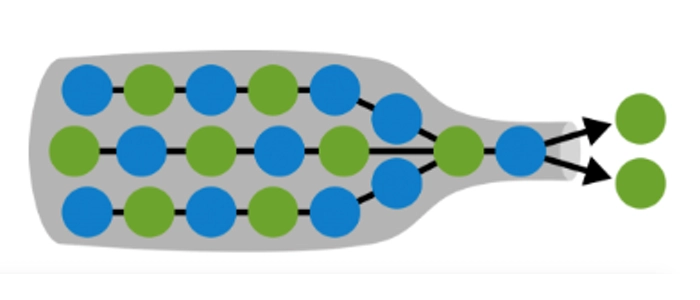
Whenever work moves through a system (a team, a workflow, a process), it will naturally pile up at the slowest step. That step becomes the bottleneck—the constraint that limits how much work you can finish, how fast you can deliver, and how predictable your outcomes are.
In this guide, we’ll break down the science behind bottlenecks in a simple, practical way—and show how Kanban teams can identify constraints early and improve flow without burning people out.
What Is a Bottleneck?
A bottleneck is any resource, step, or dependency that has less capacity than the demand placed on it.
If 30 items a week enter your workflow but one step can only complete 10 items a week, work will queue up. Lead times will grow. Frustration will rise. And the team will feel “busy” without finishing.
Why Work Gets Stuck: The Science (In Plain English)
1) Capacity Always Creates a Constraint
Every workflow has different speeds at different steps. The step with the least capacity becomes the limiting factor for the entire system.
That’s why speeding up non-bottleneck steps doesn’t improve throughput—it usually creates more inventory (more work waiting) and more chaos.
2) Variability Creates Queues
Even if average capacity “should be enough,” variability makes work pile up.
- Some tasks take longer than expected
- People get interrupted
- Dependencies arrive late
- Urgent work cuts the line
Queues are the system’s natural response to variability. The more variability, the bigger the queue—especially at the constraint.
3) Multitasking Makes Bottlenecks Worse
When teams try to “stay busy” by starting more work, they increase WIP (work in progress). Higher WIP increases:
- context switching
- handoffs
- waiting time
- hidden rework
The bottleneck doesn’t disappear. The backlog just becomes harder to see and harder to manage.
4) Local Optimization Breaks Global Flow
It’s common for teams to optimize the wrong thing:
- “Let’s keep everyone at 100% utilization.”
- “Let’s make every step faster.”
- “Let’s start more work so nothing is idle.”
But systems don’t behave that way. Throughput is driven by the constraint, not by keeping everyone busy.
The 5 Classic Signs You Have a Bottleneck
- Work piles up before one step or person
- Lead time grows even when the team is “busy”
- Done is unpredictable (delivery dates constantly slip)
- Frequent “urgent” escalations (work jumps the queue)
- Quality issues increase (rework hits the same step again)
How Bottlenecks Show Up on a Kanban Board
Kanban makes bottlenecks visible by showing:
- where cards accumulate (the biggest pile is usually a clue)
- where cards age (items stuck too long)
- where blockers cluster (repeat constraints)
- where WIP limits are constantly exceeded
If one column keeps overflowing—or one swimlane always stalls—you’re looking at a likely constraint.
How to Identify the True Bottleneck (Step-by-Step)
Step 1: Look for the Biggest Queue (Not the Loudest Complaint)
The true bottleneck is usually where work accumulates over time—not necessarily where people complain most. Queues don’t lie.
Step 2: Track Work Item Aging
If items routinely sit in one column longer than others, that area may be limiting flow.
Step 3: Compare Demand vs Capacity
Ask: “How many items per week arrive here?” vs “How many items per week can we finish here?”
If demand exceeds capacity, the queue grows. That’s physics.
Step 4: Confirm With Blockers
If many cards are blocked for the same reason (approval delays, test environment, one specialist, etc.), you’ve found a constraint pattern.
How to Fix Bottlenecks Without Burning Out the Team
1) Protect the Bottleneck
Don’t overload your constraint with random work, meetings, or interruptions. If one person or step limits throughput, protect their focus.
2) Reduce WIP (Start Less, Finish More)
Lower WIP is one of the fastest ways to relieve bottlenecks because it reduces:
- context switching
- handoff delays
- waiting time
When less work is in motion, the bottleneck clears more consistently.
3) Improve Flow Into the Bottleneck
Feed the constraint with “ready” work:
- clear requirements
- complete inputs
- fewer surprises
If the bottleneck is constantly clarifying or reworking upstream issues, throughput collapses.
4) Shift Work Away From the Bottleneck
Sometimes you can redesign the workflow so the constraint does less:
- automation
- templates
- standard work
- moving decisions earlier
5) Add Capacity Only After You Fix Flow
Hiring or adding people can help—but only after you’ve reduced WIP and improved upstream quality. Otherwise, you just create a bigger queue faster.
Practical Daily Habits That Keep Bottlenecks Visible
Most bottlenecks are predictable if you look at them daily. A quick daily rhythm helps you catch constraints before they explode.
- review the board together
- call out blocked items
- spot growing queues
- decide the next best action
Final Thoughts
The science of bottlenecks is simple: flow always slows at the constraint, and variability plus high WIP amplifies the pain. The good news is that Kanban makes constraints visible—and when you manage bottlenecks deliberately, delivery becomes faster, calmer, and far more predictable.
Related Articles
- How to Run a Daily Huddle That Actually Works
- Daily Standups: How to Run Daily Meetings That Don’t Waste Time
- How to Run a Daily Scrum (Standup) That Actually Works