Kanban vs Scrum: Which One Should Your Team Use?
Kanban and Scrum are two of the most common Agile approaches — and also two of the most misunderstood. Teams often ask, “Which one is better?” The better question is: Which one fits our work?
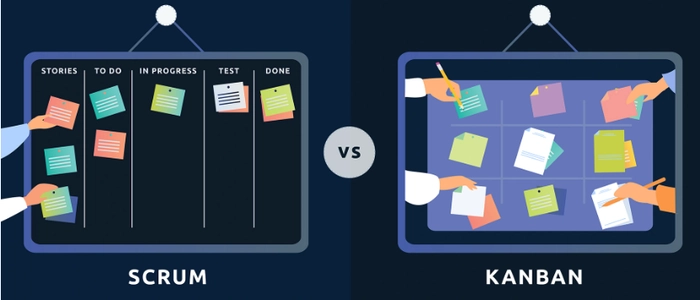
Kanban is built for continuous flow and changing priorities. Scrum is built for time-boxed delivery and predictable planning cycles. Both can work extremely well when applied in the right context.
Quick Summary: Kanban vs Scrum
- Choose Kanban if work arrives continuously, priorities shift often, and you want smoother flow.
- Choose Scrum if you deliver in batches, need a reliable cadence, and benefit from structured planning.
- Choose a hybrid if you want Scrum planning discipline with Kanban flow visibility.
What Is Kanban?
Kanban is a visual workflow method that helps teams manage work as it moves through stages (for example: To Do → Doing → Done). The focus is on flow: how quickly and smoothly work moves from start to finish.
Kanban is especially useful when you have:
- Unplanned work and changing priorities
- Ongoing operational tasks (support, ops, admin, requests)
- Multiple types of work competing for attention
If you want a beginner-friendly foundation, start here: What Is Kanban? A Complete Beginner’s Guide .
What Makes Kanban Effective
Kanban becomes powerful when teams actively manage overload. By limiting how much work is in progress, teams finish work faster instead of spreading effort thin across too many tasks.
What Is Scrum?
Scrum is an Agile framework designed around short delivery cycles called sprints (often 1–2 weeks). Teams commit to a sprint goal, plan work up front, and review results at the end of each sprint.
Scrum works best when:
- You deliver work in predictable batches (features, releases, initiatives)
- You benefit from a planning rhythm and a clear sprint goal
- You need alignment across a cross-functional team
If Scrum is new to you, this overview provides the full context: What Is Scrum? A Complete Beginner’s Overview .
Strong Scrum execution depends on effective planning. If sprint planning feels rushed or chaotic, this guide will help: Sprint Planning Guide: How to Run a High-Impact Sprint .
Kanban vs Scrum: The Differences That Actually Matter
1) Continuous Flow vs Time-Boxed Work
Kanban is continuous. New work is pulled in only when capacity is available.
Scrum is time-boxed. Teams commit to a defined set of work for the sprint.
2) Flexibility vs Commitment
Kanban allows reprioritization at almost any time. Scrum prioritizes stability during the sprint to protect focus and predictability.
3) Managing Overload
Kanban exposes overload immediately through visible work-in-progress. Scrum often reveals overload later, when work repeatedly carries over between sprints.
4) Planning Style
Scrum emphasizes upfront planning at sprint boundaries. Kanban emphasizes continuous decision-making based on real flow data.
Which One Should Your Team Use?
Choose Kanban if…
- Your team handles incoming requests or operational work
- Priorities change frequently
- You want to reduce work-in-progress and improve flow
- You need flexibility without heavy ceremony
Choose Scrum if…
- Your team delivers work in planned increments
- You want a predictable planning and review cadence
- You benefit from shared sprint goals and clear roles
Choose a Hybrid if…
- You want Scrum planning with Kanban-style flow visibility
- You want to limit WIP inside a sprint
- You want structure without sacrificing adaptability
If you want practical guidance on blending the two approaches, this article walks through real scenarios: How to Choose Between Scrum and Kanban (Real Examples) .
Scrum Boards and Team Roles
Scrum relies on clarity — both in how work is visualized and who owns what. Two common gaps teams face are unclear boards and misunderstood roles.
These guides help close those gaps:
- What Is a Scrum Board? Full Walkthrough for Beginners
- Scrum Roles Explained: Who Does What on an Agile Team?
Kanban, Scrum, and the Bigger Picture
Both Kanban and Scrum live within the broader Agile ecosystem. If you’re evaluating methods at a higher level, this comparison provides helpful context: Agile vs Waterfall: Which Method Is Right for Your Project? .
Final Recommendation
Kanban and Scrum are not competitors — they’re tools for different situations.
- If your work is continuous and unpredictable, start with Kanban.
- If your work is planned and delivered in cycles, use Scrum.
- If you need both, design a hybrid intentionally.
The real goal isn’t choosing a framework. It’s building a system that helps your team finish meaningful work faster — with less chaos.